
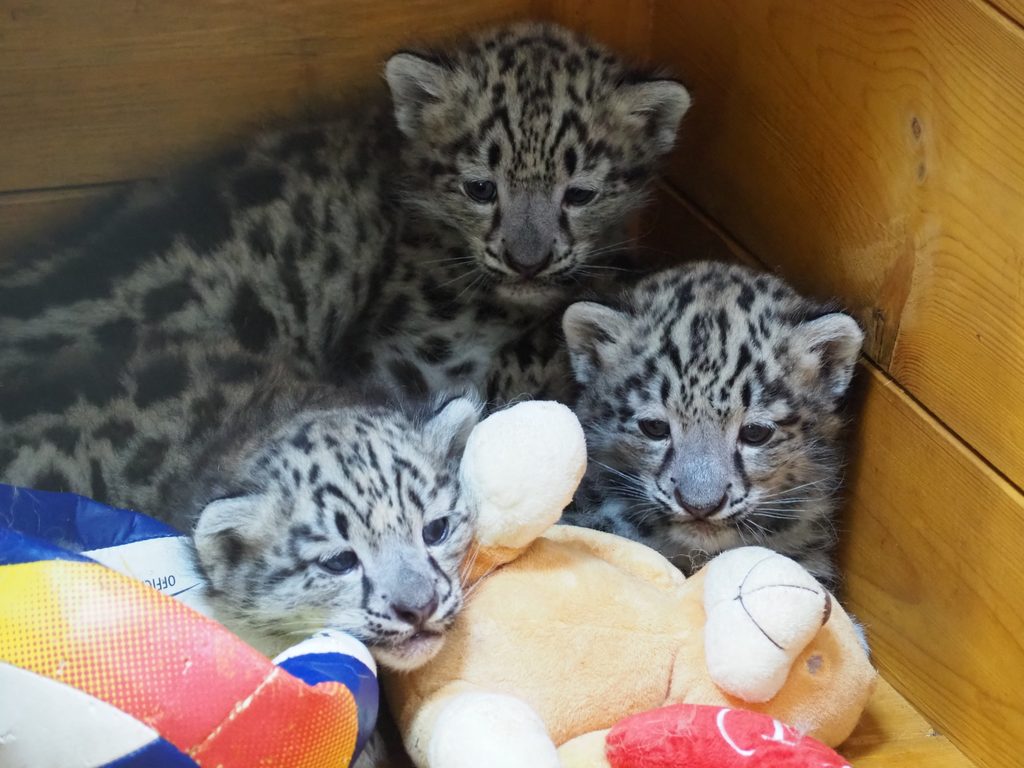
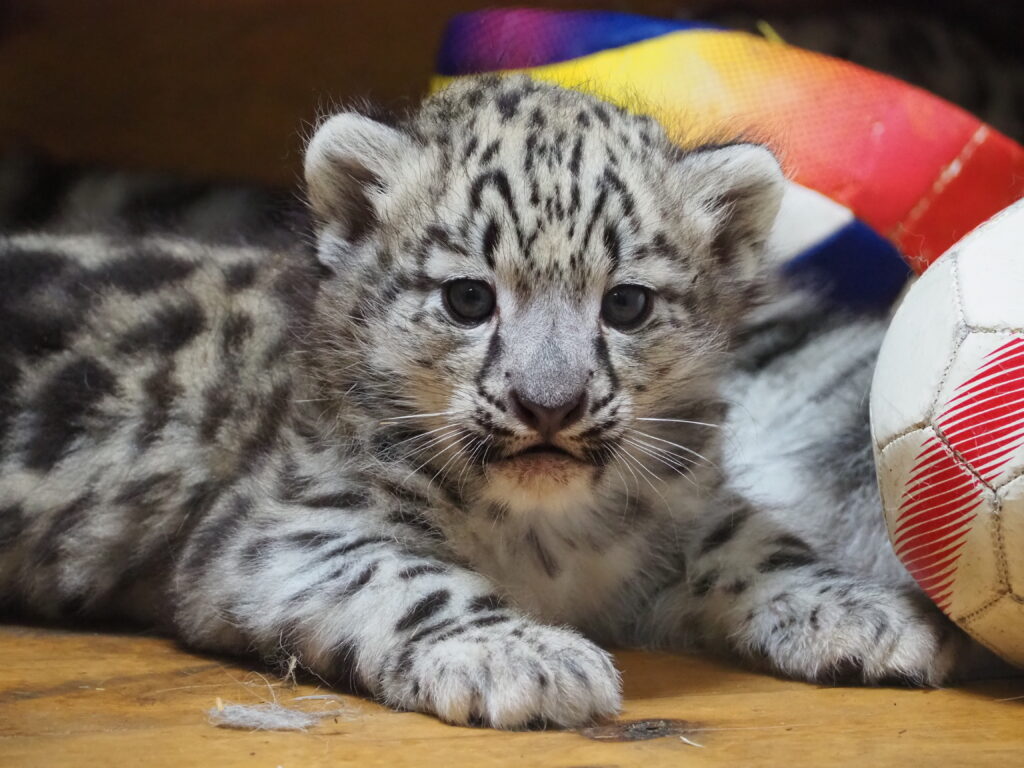
Three snow leopard (Panthera uncia) cubs have been born at Warsaw Zoo. Saathi, Shapur and Shisha arrived on July 11 and, just over two months later, are growing rapidly and becoming increasingly active.
Their progress can be seen in their weight. At their first weigh-in, when they were ten days old, the three cubs weighed between 850 and 920 grams. They now weigh between 4.2 and 4.5 kilograms.
In keeping with Warsaw Zoo’s tradition, all animals born at the zoo in 2026 are being given names beginning with the letter “S”. Keepers chose three names linked to different languages and places.
Saathi means “companion”, “friend” or “partner” in Hindi, while Shapur is a Persian name that can be translated as “son of the king” or “descendant of the king”. Shisha was named after Shishapangma, one of the world’s mountains exceeding 8,000 metres, in the Himalayas.
Learning to be predators through play
Their mother, Suri, is closely caring for the three cubs and is also involved in their first steps towards behaviours they will use as adult predators.
According to the zoo, she allows the cubs to “hunt” her during play, while the three siblings are also particularly interested in balls, soft toys and cardboard boxes.
As they grow, Saathi, Shapur and Shisha are becoming more agile. They have started climbing to higher levels and are increasingly exploring their surroundings.
Since reaching one month of age, the cubs have also begun tasting meat. Their mother’s milk, however, will remain the main component of their diet until they are around five months old.
Visitors will have to wait before seeing the cubs outdoors
The three young snow leopards are not yet ready to explore their outdoor habitat.
They are currently awaiting their second vaccination, scheduled for early October. After that, additional time will be needed for them to develop sufficient post-vaccination immunity.
For this reason, Warsaw Zoo expects the cubs to begin venturing outdoors in around a month, once it is safe for them to do so.
Snow leopards are adapted to the harsh high-altitude environments of Central Asia. Their thick fur provides insulation against low temperatures, while their exceptionally long tail has several functions, including helping with balance as they move across steep and rocky terrain.
For now, Saathi, Shapur and Shisha are practising those skills on a much smaller scale: climbing, exploring and playing under Suri’s watchful eye.