
Seeking shelter, regrouping, preparing to sleep and, in one case, becoming more active and repeatedly attempting to mate. While millions of people watched the total solar eclipse on 12 August, BIOPARC Fuengirola and BIOPARC Valencia monitored several species to investigate how animals responded to the sudden change in natural light.
Initial observations suggest a general tendency to bring forward behaviours normally associated with nightfall, as if the eclipse’s sudden darkness had temporarily altered the animals’ perception of the time of day. However, the collected data still need to be analysed and compared with observations made at the same time on previous days.
The most striking response was recorded among the sitatungas (Tragelaphus spekii) at BIOPARC Fuengirola. The group, consisting of two females and one male, was initially calm, as usual at that time of day, but became noticeably more active as conditions changed. Several mating attempts were also observed.
BIOPARC stresses that it cannot be concluded that the eclipse directly caused the reproductive behaviour. However, the timing of the sudden darkness, increased activity and mating attempts provides a noteworthy record consistent with behavioural changes documented during previous solar eclipses.

The park also monitored a binturong (Arctictis binturong), a mainly crepuscular and nocturnal mammal, which showed no significant behavioural changes.
At BIOPARC Valencia, one of the clearest responses came from the Thomson’s gazelles (Eudorcas thomsonii). As darkness fell while they were outdoors, the animals sought shelter among the rocks and settled down to sleep. When daylight returned, they resumed their activity.
Changes were also observed among the western chimpanzees (Pan troglodytes verus). One of the two infants climbed to the highest part of the reconstructed tree, while the rest of the group gathered at its base and moved towards the entrance to the indoor areas.
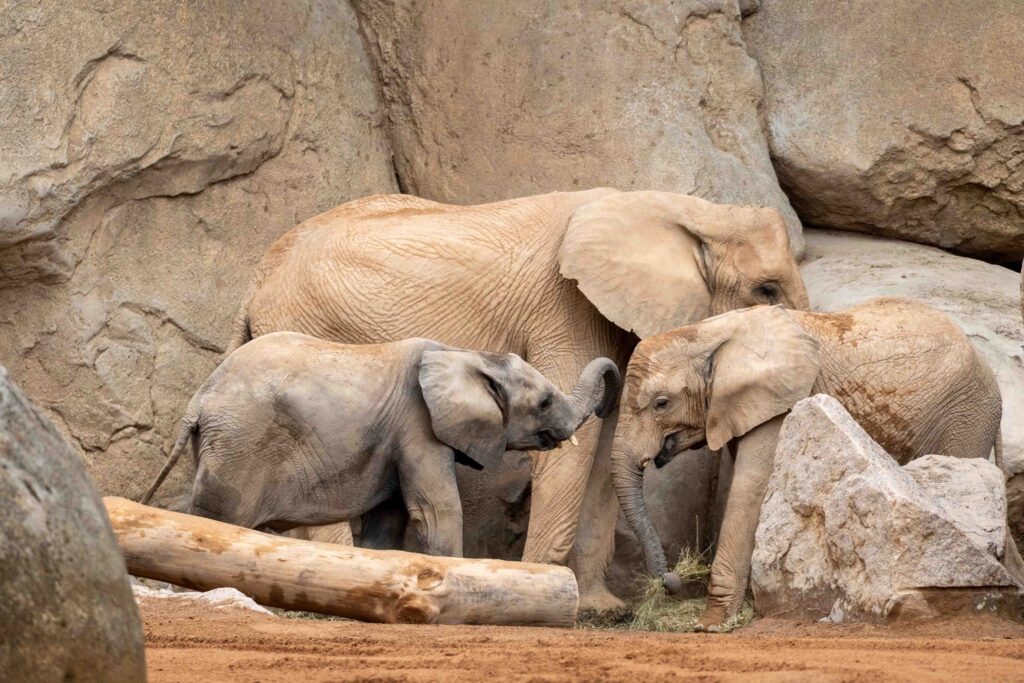
The African savanna elephants (Loxodonta africana), including the two calves, continued feeding normally, although they showed curiosity about the unusual activity among people nearby. Aldabra giant tortoises displayed a similarly limited response.
Birds reacted in different ways. Ostriches became more active, while some other birds experienced an unexpected shift in their feeding routine. Darkness arrived before their evening food had been provided, prompting them to return to their nests and settle down. When daylight quickly returned, they emerged again before later going back to sleep.
The material collected during the eclipse will now be compared with recordings made previously at the same time of day. Researchers aim to establish whether the observed changes were specifically associated with the eclipse or were part of the animals’ normal behavioural patterns.
The results will also contribute to the TriEclipse Project, a global initiative led by UDENA (Nature Unit) investigating the potential effects of these unusual astronomical events on living organisms.
Meanwhile, BIOPARC Acuario de Gijón set up a dedicated eclipse-viewing area for visitors. As part of Spain’s national “A unique view. Look after it” campaign, 8,000 certified eclipse glasses were distributed free of charge.