
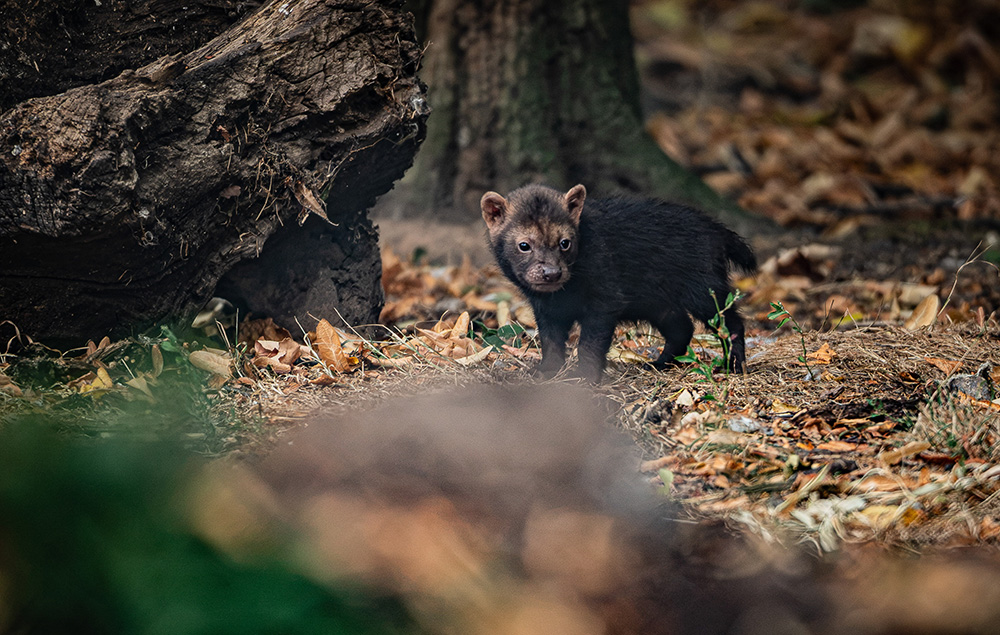
Five bush dog pups have made their first public appearances at Chester Zoo, around a month after their birth. The litter is the only one born in the UK so far this year and is part of the European conservation breeding programme for this little-known South American carnivore.
Five young bush dogs have begun venturing out of their den at Chester Zoo, offering the first glimpses of the only litter of the species born in the UK this year.
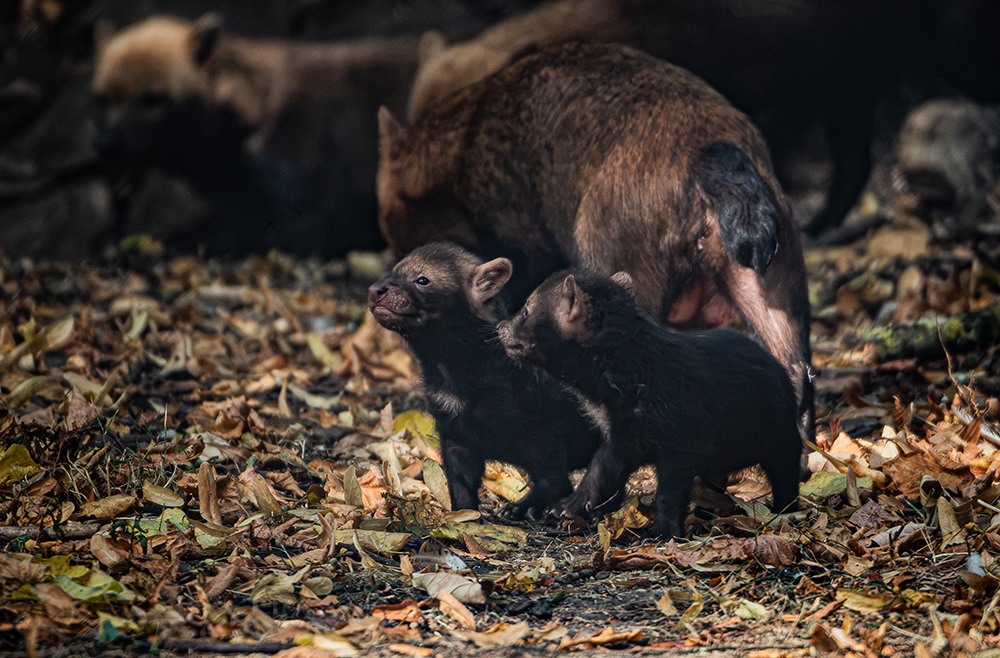
The pups were born around a month ago to four-year-old Molly after a 65-day pregnancy. They are now gradually becoming more confident and exploring their surroundings alongside their parents and older siblings.
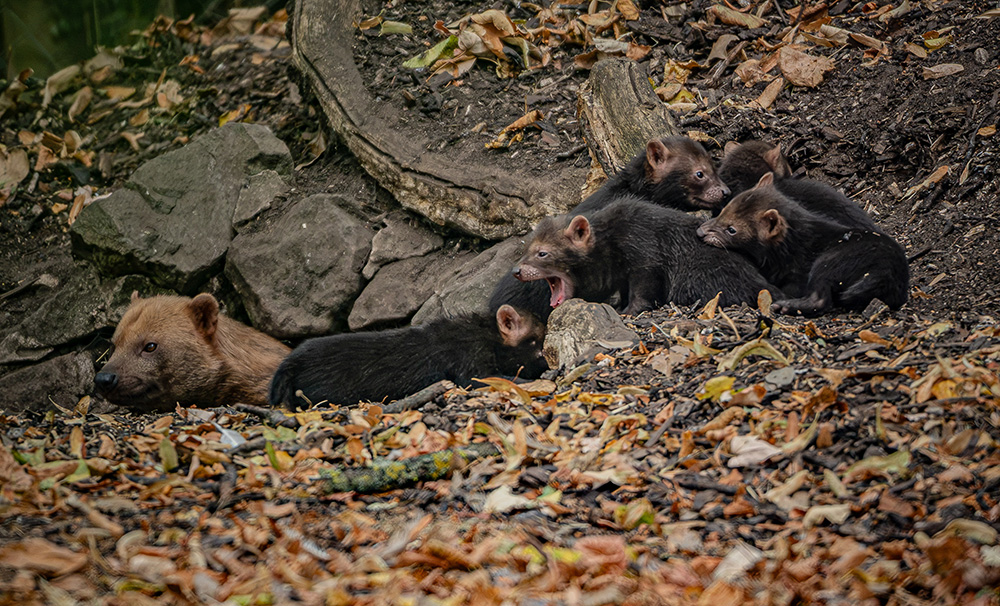
“At this stage, they’re just little furry potatoes. They toddle around a bit, but mostly they huddle together in a pile,” said Richard Tyson, Carnivore Keeper at Chester Zoo.
“It won’t be long before they’re eating solid food, and we’ll start providing them with little bits of chicken or rabbit to try over the next few weeks.”
The five pups weighed between 120 and 150 grams at birth, roughly the weight of a can of sardines.
During their first weeks, keepers left Molly and her family undisturbed in one of three dens, meaning they initially did not know exactly how many pups had been born. One of the first indications of a successful birth came from the sounds inside the den: young bush dogs produce high-pitched chirps that can sound surprisingly similar to birds.
Growing up in a family group
As the pups become more active, their older brothers and sisters are also showing considerable interest in the new arrivals.
“The older brothers and sisters like to move the little pups around, but they have quite short legs, so they can’t lift them fully off the ground. They get bumped around a bit and then you hear a lot of squeaking,” Tyson explained.
“That’s when Molly comes over and tells them off. Dad Charlie has been protective too. It’s all normal – the family is getting along well and the pups look healthy.”
Bush dogs live in family groups and are found across parts of Latin America, occupying habitats including wet savannas and open grasslands. Despite their broad geographical distribution, they can be locally rare.
Habitat loss and degradation, hunting and disease are among the pressures facing the species. Chester Zoo highlights the expansion of soy production as one of the activities affecting habitats used by bush dogs and other wildlife in parts of South America.
Part of the European conservation breeding programme
The five pups are part of a European conservation breeding programme aimed at maintaining a genetically healthy population of bush dogs under human care.
They are currently the youngest bush dogs in the UK. Twenty-five pups have been born across Europe so far this year, meaning the Chester litter accounts for one fifth of the total.
Chester Zoo also works with conservation partners in Latin America on projects focused on protecting species and their habitats. Its teams have recorded wild bush dogs using camera traps during wildlife monitoring in Brazil and support research into the effects of soy farming on local fauna.
“We’re working on landscape projects in Latin America designed to support multiple species, including bush dogs,” said Paul Bamford, Regional Field Programme Senior Manager for Chester Zoo’s Latin America conservation work.
“Soy farming has been identified as a key threat to bush dog populations, but research like this can help us understand the impacts on wildlife and inform better production standards for the industry.
“We hope the newborn pups at the zoo will help people discover a species they may never have heard of, and understand why protecting wildlife and habitats in Latin America is important.”