
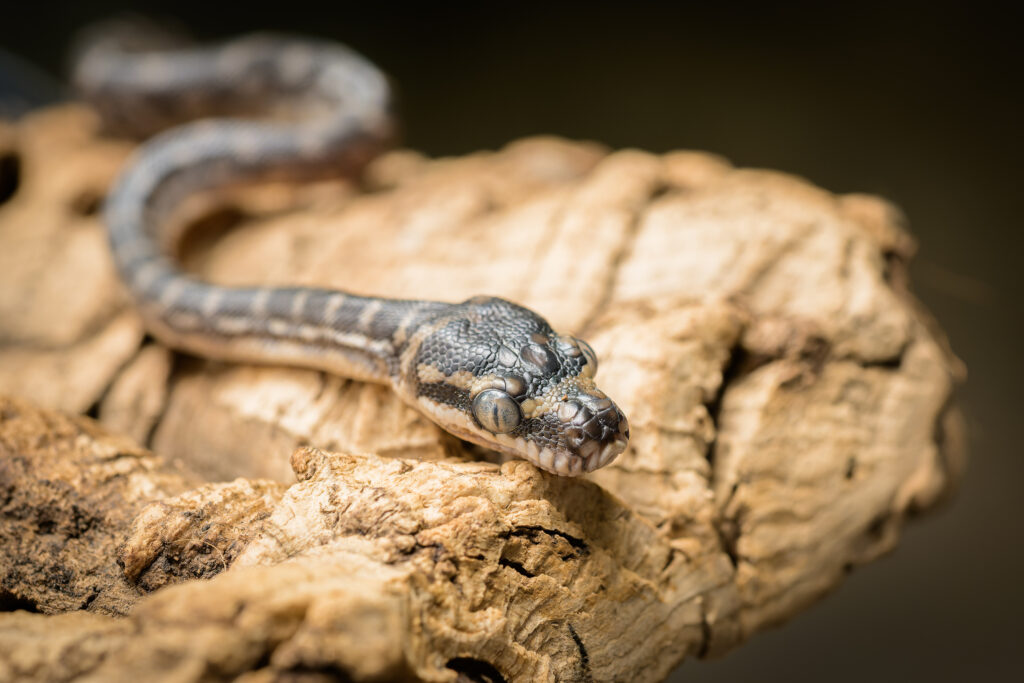
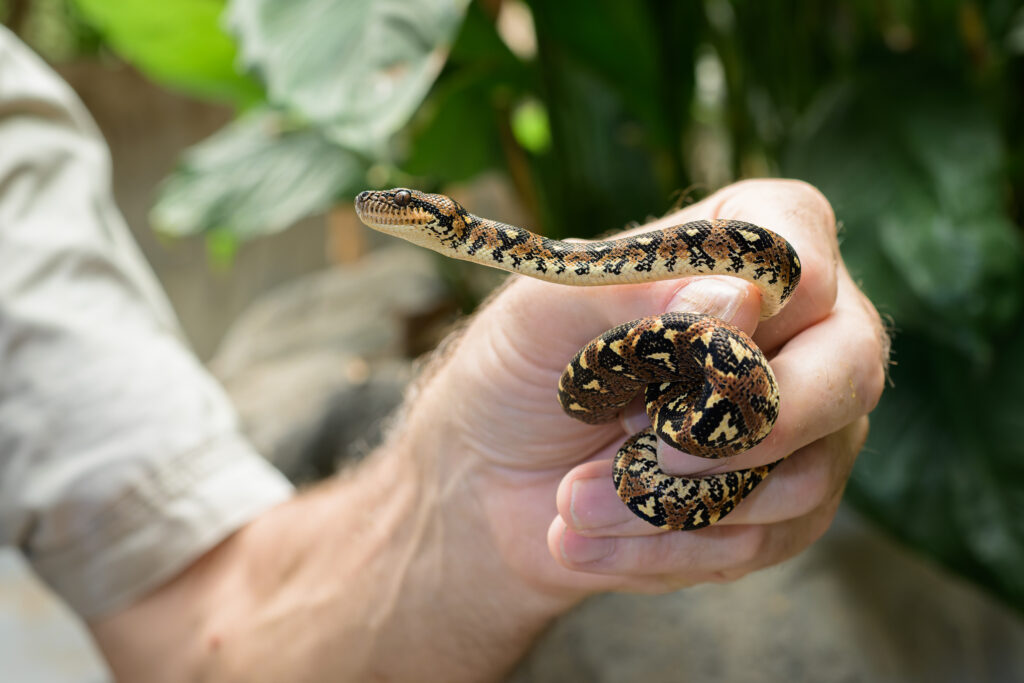
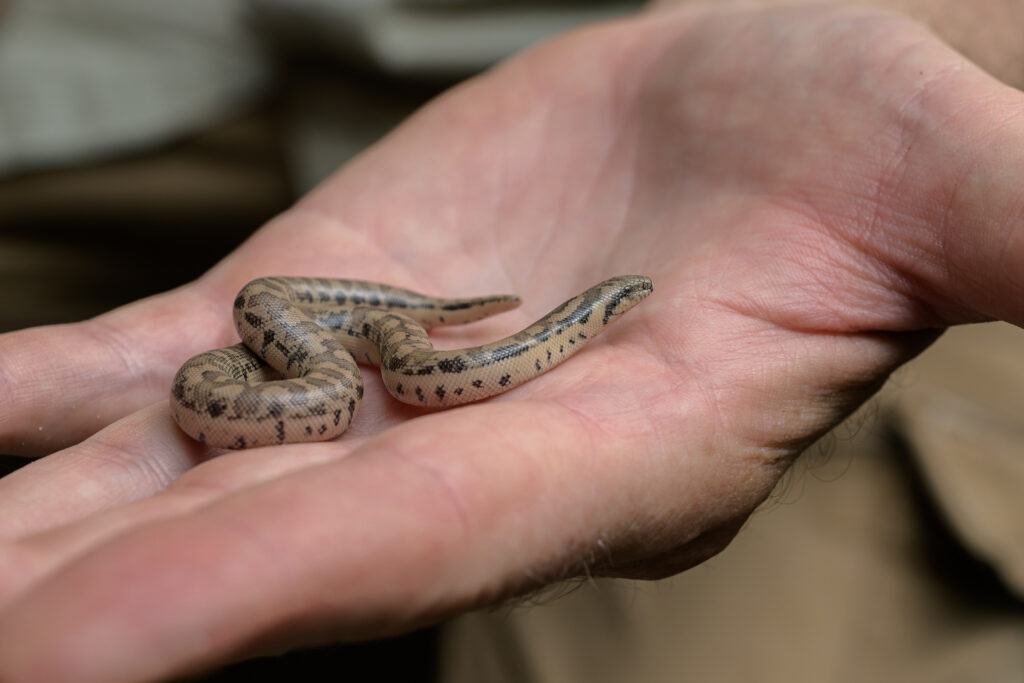
Prague Zoo has announced a triple breeding success with the first-ever births of three snake species at the zoo: the rough-scaled python (Morelia carinata), Dumeril’s boa (Acrantophis dumerili) and the Tartar sand boa (Eryx tataricus).
The zoo welcomed two rough-scaled python hatchlings, ten Dumeril’s boa neonates and four Tartar sand boas, marking an important milestone for its reptile breeding programme.
A second chance after wildlife trafficking
Two of the three breeding successes carry a particularly powerful conservation message. The rough-scaled pythons and the Tartar sand boas are the grandchildren of snakes confiscated from wildlife traffickers during customs operations.
“These are three very different snake species from three completely different parts of the world. Every breeding success is exciting, but two of them perhaps even more so. I am referring to the rough-scaled pythons and the Tartar sand boas. In both cases, these are the grandchildren of snakes confiscated from traffickers in Vienna and Cologne, respectively. Breeding the descendants of animals rescued from the illegal wildlife trade is a positive continuation of what would otherwise be a rather sad story,” said Petr Velenský, Curator of Reptiles at Prague Zoo.
Three species from very different habitats
The rough-scaled python is a rare arboreal species endemic to the Kimberley region of north-western Australia. First described in 1981, it remained known from only around ten wild individuals until 2007. Today, it survives in a handful of humid gorges, giving it one of the smallest known distributions of any snake species.
The Dumeril’s boa, endemic to Madagascar, is a viviparous species that gives birth to fully developed young. Juveniles display a much brighter and more contrasting colour pattern than adults.
The Tartar sand boa is also viviparous and is highly adapted to the sandy deserts and semi-deserts of the Middle East and Central Asia. Spending much of its life buried beneath the sand, it has evolved a cylindrical body and reduced eyes that allow it to move efficiently through loose substrates.