
The highly infectious fungus Batrachochytrium salamandrivorans (Bsal), commonly known as the “salamander-eater”, is one of the major threats facing salamanders and newts in Europe, alongside habitat loss.
First detected 13 years ago, the pathogen causes severe skin lesions and can have devastating consequences for fire salamander populations.
“Bsal causes wounds in the skin, which is the animals’ central metabolic organ. Especially for fire salamanders, an infection is usually fatal,” explains Dr Stephan Hering-Hagenbeck, director of Schönbrunn Zoo.
The fungus, which is thought to have been introduced from Asia, is harmless to humans. According to Schönbrunn Zoo, this is one reason why wildlife diseases such as Bsal receive less attention than zoonoses, which can spread from animals to humans.
A recent study involving Schönbrunn Zoo argues that diseases affecting wildlife alone also need greater attention because their consequences can extend beyond individual species, threatening biodiversity and ecosystem functioning.
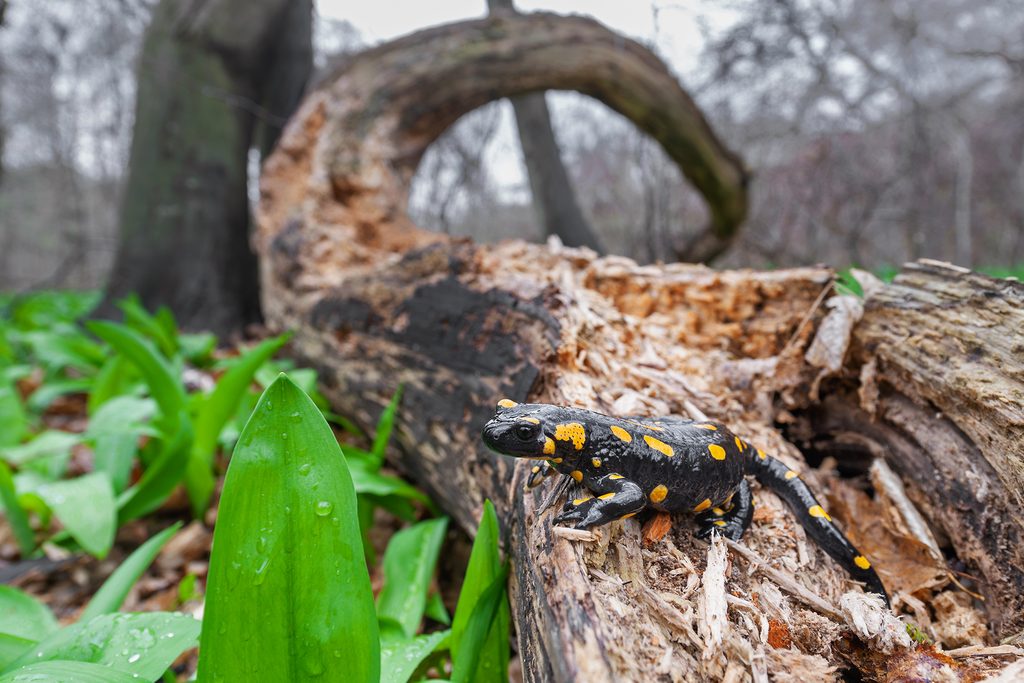
Local populations have already disappeared
The spread of Bsal highlights what researchers describe as a lack of cross-border coordination and adequate financial resources at European level.
In Belgium, the Netherlands and Germany, the fungus has already wiped out subpopulations of fire salamanders. It has not yet been detected in Austria or Luxembourg, but continued surveillance is considered essential.
“The continuing spread of the fungus can only be detected through repeated monitoring,” says project leader Dr Doris Preininger, a researcher at Schönbrunn Zoo.
Since 2016, under the zoo’s coordination and with support from across Austria, salamanders and newts have been sampled in almost all Austrian federal states. Skin swabs collected from animals in the wild and under human care are analysed by the Konrad Lorenz Institute of Ethology at Vetmeduni Vienna.
“We are calling for uniform EU-wide coordination, cross-border conservation measures and structural financial support to combat Bsal,” Preininger says.
Once established, the fungus is almost impossible to contain
Preventing the pathogen from reaching new areas is particularly important because Bsal spores can survive for months in moist substrates even without a host. Once the fungus has become established, containing it in the wild is therefore almost impossible.
The largest fire salamander populations in Austria live around Vienna. People visiting natural areas can help reduce the risk of spreading the fungus by thoroughly cleaning and drying hiking shoes and other equipment after excursions.
Plants and animals kept in terrariums should never be released into the wild, as they may carry and spread the pathogen. Dead salamanders or newts that have clearly not been killed by road traffic should also be reported.
Early detection is crucial because infected animals may still be treated and cured. Once Bsal spreads through a wild population, however, the options for controlling it become extremely limited.

 has already wiped out local fire salamander populations in Belgium, the Netherlands and Germany. Schönbrunn Zoo is calling for coordinated EU-wide monitoring and cross-border measures to prevent its further spread.)