From the outside, it looks like a giant fire salamander. Black and yellow, it is impossible to miss as soon as you enter Ostrava Zoo. But inside, the new Amphibiarium tells the story of one of the less visible biodiversity crises: the decline of amphibians, now the most threatened group of vertebrates on the planet.
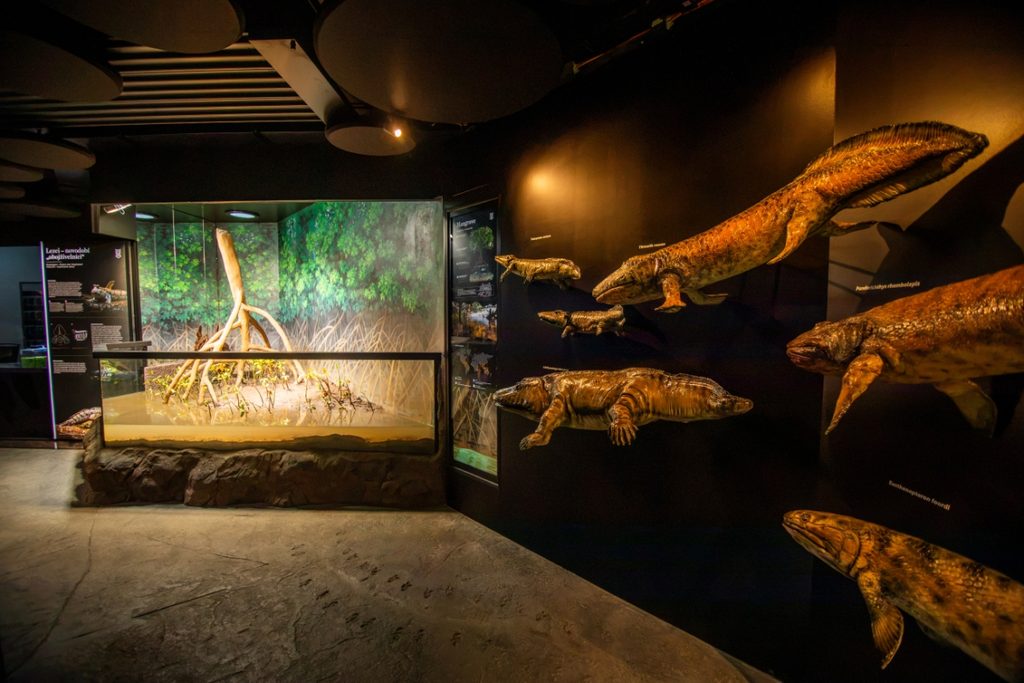
Opened on August 28, the new building houses around 40 environments, including terrariums, aquaterrariums and aquariums, designed to provide different temperature and humidity conditions. They will gradually become home to a similar number of species of frogs, toads, newts and salamanders from habitats around the world. The exhibition allows visitors to observe these animals up close, often much more closely than would be possible in the wild.
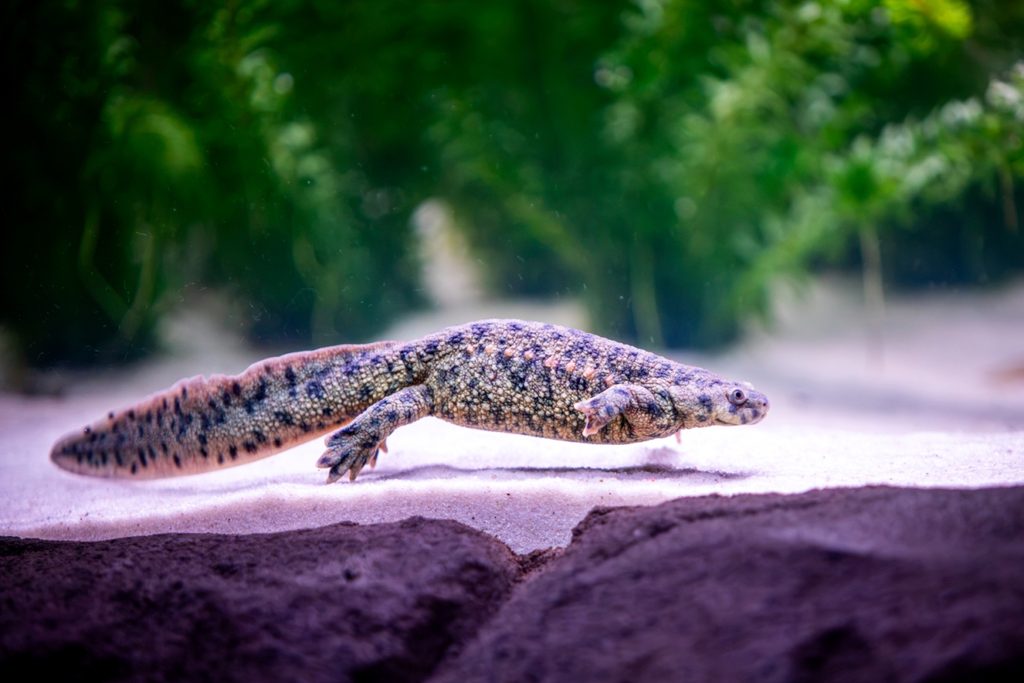
Their very name reflects a life divided between two environments: it derives from Greek and means “double life”. In most species, eggs are laid in water and hatch into gill-bearing larvae, which gradually acquire their adult form through metamorphosis. But not all amphibians follow the same path. Among the animals in the new building are axolotls, Mexican salamanders that reach maturity while retaining external gills and other larval characteristics. They are also capable of regenerating limbs and parts of several organs, a remarkable ability that has made them an important model for scientific research.
Behind the glass, however, lies above all a complex conservation facility. Amphibians are ectothermic animals, meaning their body temperature depends on their environment, and they have thin, permeable skin through which they can absorb water and exchange gases. These characteristics make careful control of temperature and humidity essential, while also leaving amphibians particularly vulnerable to pollution and infectious diseases.
For this reason, every individual arriving in Ostrava had to undergo strict quarantine before entering the new building, which has also been designed to reduce the risk of spreading chytridiomycosis, the fungal disease that has already caused the decline or disappearance of entire populations in the wild.
According to the IUCN Red List, almost half of all known amphibian species are threatened with extinction. Habitat loss, water pollution, climate change and disease often act simultaneously. Amphibians’ sensitivity to environmental changes also makes them early indicators of ecosystem health: their decline can signal deteriorating water quality and habitat conditions before other effects become apparent.
Construction of the Amphibiarium began in January 2025 and cost more than 55 million Czech koruna, approximately €2.2 million. The project required specialised systems for ventilation, misting and temperature control, as well as artificial rockwork and vegetation designed to recreate a range of different biotopes.
The message of the new building, however, is not limited to exotic species. Protecting amphibians means protecting ponds, streams, forests and wetlands — environments on which countless other species depend, humans included. Because when frogs and salamanders begin to disappear, it is often a sign that something is already wrong with the entire ecosystem.