
An exceptional Egyptian vulture (Neophron percnopterus) chick is growing at Prague Zoo. His parents, Brok and Qalamoon, both came from the wild after surviving illegal capture and serious injuries in the Middle East. Their rescue involved years of cooperation between conservationists and institutions across five countries.
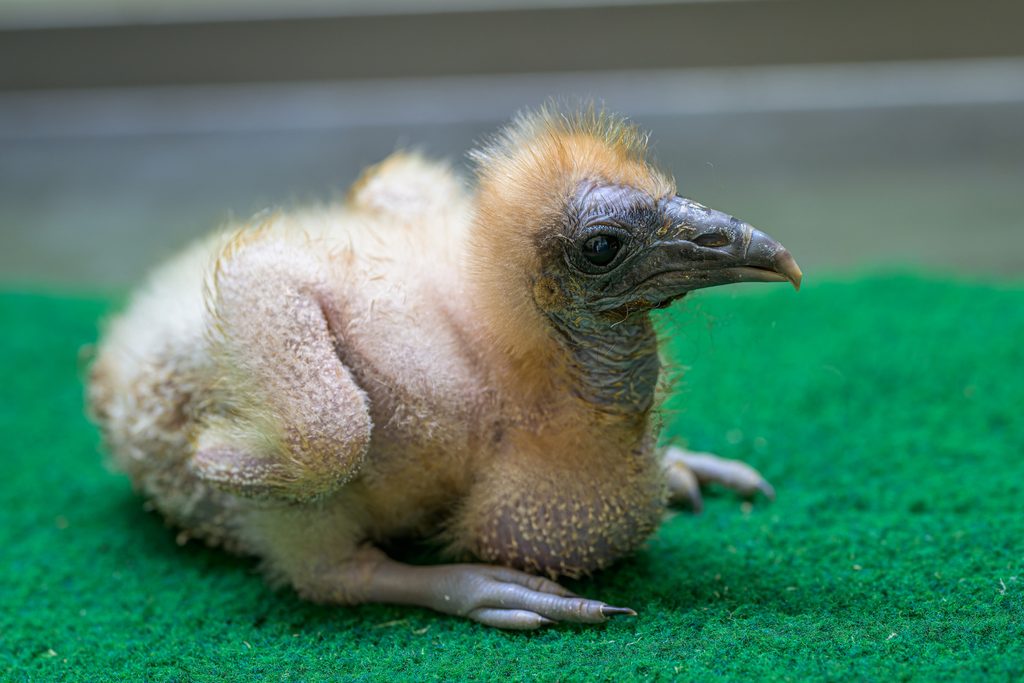
The two vultures recovered after arriving in Prague in 2022, formed a pair and this summer produced their first offspring. The chick, a male named Kali, hatched on July 12.
His story is particularly significant because of what happened to his parents before they reached Prague.
Brok was found by rangers from the Society for the Protection of Nature in Lebanon (SPNL) in September 2021. He and two other Egyptian vultures were being illegally kept on a farm in Lebanon. One could eventually be returned to the wild, but Brok and another male, Loki, had healed wing fractures and lead pellets in their bodies that prevented their release.
Both arrived at Prague Zoo in June 2022. Loki later moved to France, while Brok remained in Prague.
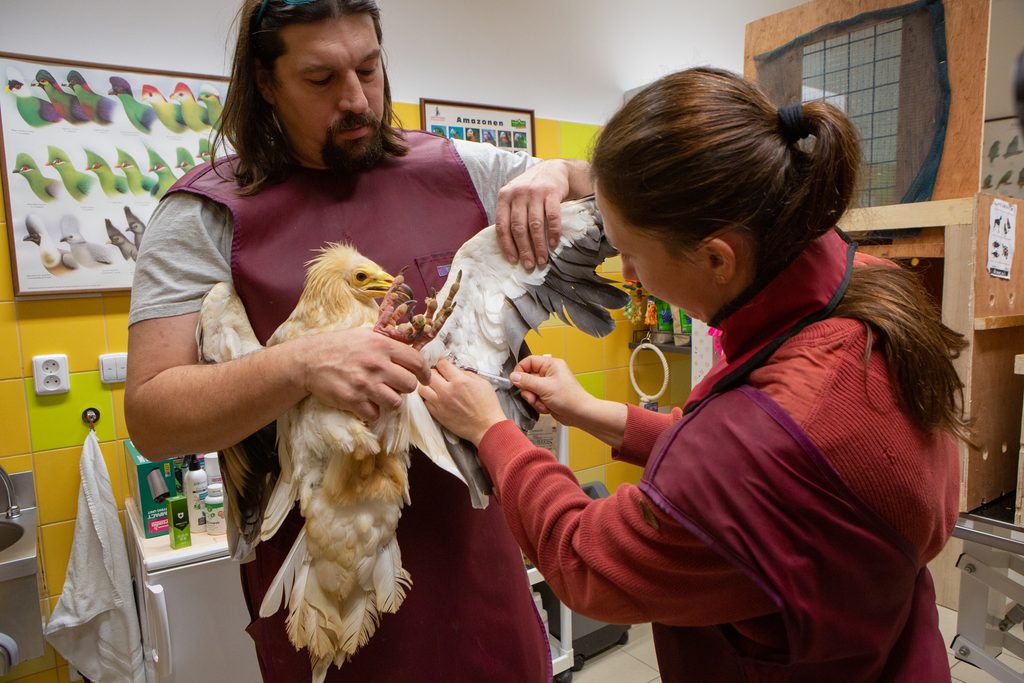
“I removed three pellets from his body; another six will probably remain there forever. They are encapsulated and surgery would be risky,” explains veterinarian Helena Vaidlová.
Lead levels in the rescued vultures’ blood have gradually decreased, but their case is also providing an opportunity to investigate the potential effects of lead on reproduction.
“We do not yet know how much lead affects reproduction, in other words what the threshold is for reduced fertility and embryo development. All of this is the subject of further testing. We have no comparison abroad because this is the first comprehensive study of its kind in this species,” Vaidlová adds.
Qalamoon: from Syria to the European breeding programme
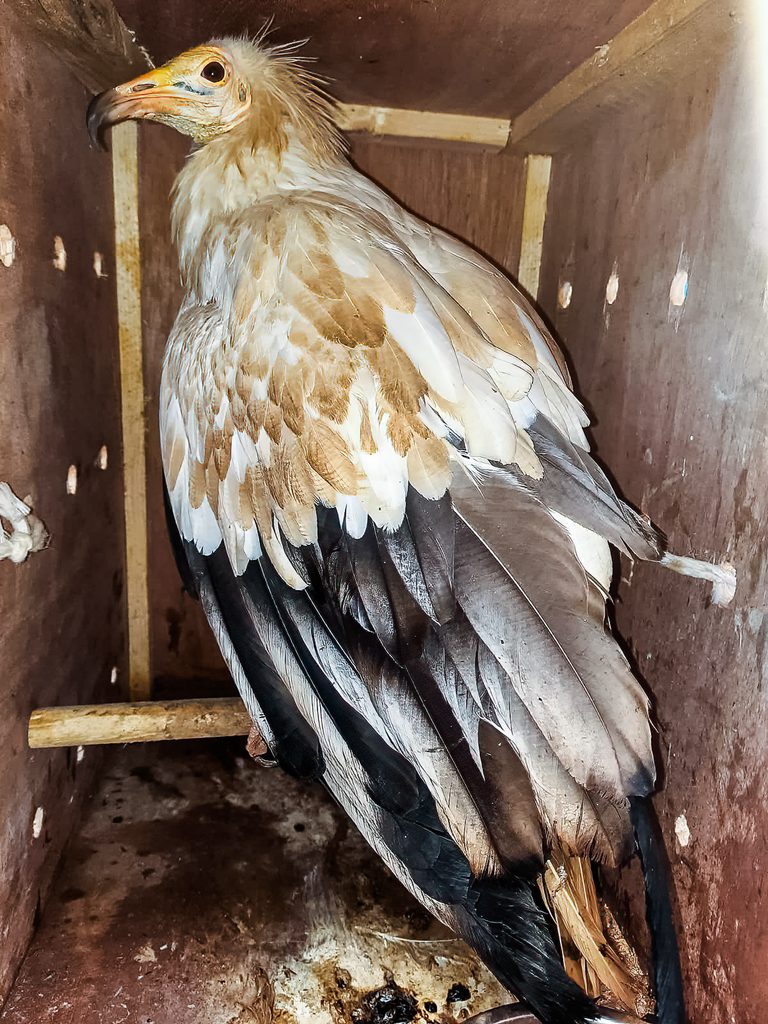
Kali’s mother has an equally difficult history. Qalamoon was captured in Syria during migration in 2019 or 2020 and was found in illegal keeping in 2021 together with another young Egyptian vulture.
The younger bird recovered and was released, but the adult female had a wing problem and could not return to the wild.
After complex negotiations, she was transported from Damascus via Beirut and Istanbul to Prague, arriving in September 2022. Named Qalamoon after the mountain range along the Lebanese-Syrian border, she became the first vulture from Syria to join the European breeding programme and, according to Prague Zoo, the first bird from the country ever to enter an EEP.
On arrival, she showed signs of infection and osteoarthritis in her left wing resulting from an untreated injury. After her condition improved and she completed a month-long quarantine, she was moved to an introduction aviary where Egyptian vultures can choose a compatible partner.
That is where she formed a bond with Brok.
“At Prague Zoo, we like to say that nature conservation should know no national borders, and this success is that idea put into practice. Thanks to the cooperation of local authorities, the efforts of conservationists and our long-term collaboration with Bulgarian colleagues, who coordinate these unprecedented transfers of injured birds of prey to Europe, these almost cinematic stories can have happy endings,” says Antonín Vaidl, Prague Zoo’s bird curator and coordinator of the EEP for the species.
Kali is growing with a foster mother — and a puppet
This year Qalamoon unexpectedly laid a fertile egg directly in the introduction aviary. Because the location was unsuitable and the egg was particularly valuable, it was transferred to an incubator.
Kali hatched on July 12. As Brok and Qalamoon were inexperienced parents, the chick was placed with Debora, an experienced female that had previously acted as a foster mother.
Keepers also supplemented his feeding using a puppet resembling the head of an adult Egyptian vulture. The established technique allows staff to feed the chick while reducing the risk of imprinting on the human face of the keeper.
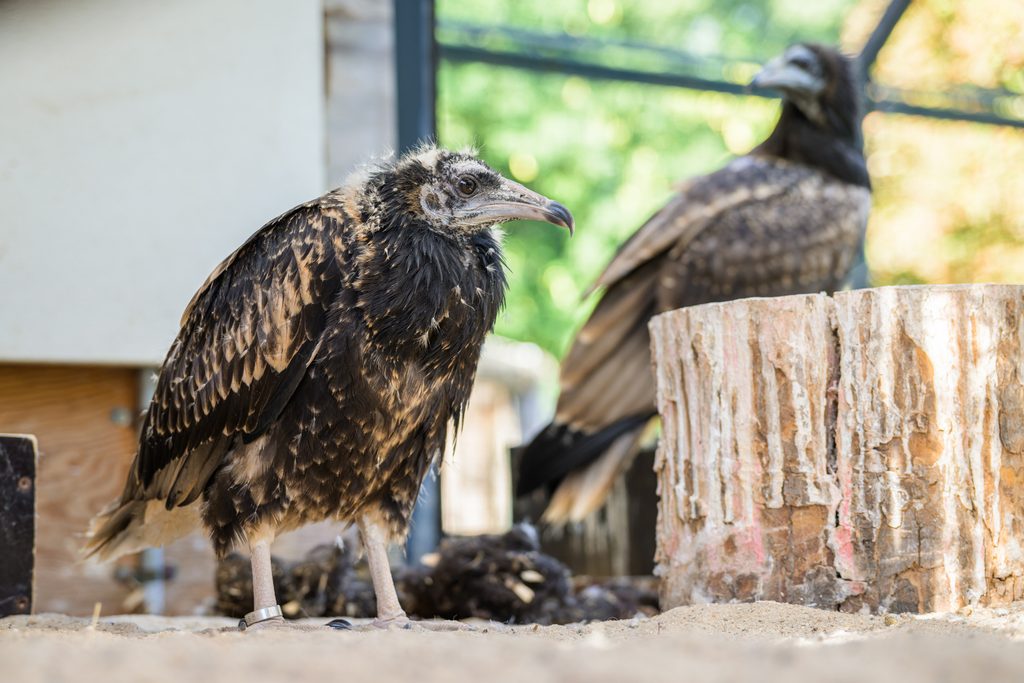
Kali is now growing well and already increasingly resembles an adult Egyptian vulture, although he will not acquire full adult plumage until the beginning of the next decade.
In the future, he is expected to move to another European zoo and contribute to the population managed under the European breeding programme. Brok and Qalamoon will remain in Prague, where they may reproduce again.
A second chance for vultures that cannot return to the wild
The Egyptian vulture is the only migratory vulture species in Europe. Each year, individuals can travel up to 5,000 kilometres between breeding grounds in southern Europe and wintering areas in Africa.
Along the route, they face threats including collisions with power lines and wind turbines, illegal capture and shooting. When injured birds can no longer be returned to the wild, cooperation between local conservation organisations and zoological institutions can offer them another role in the conservation of the species.
The rescue of Brok and Qalamoon involved organisations including the Bulgarian Society for the Protection of Birds (BSPB), the Society for the Protection of Nature in Lebanon (SPNL), the Syrian Society for the Conservation of Wildlife (SSCW) and BirdLife International Middle East (BLIME).
Prague Zoo coordinates the EEP for the Egyptian vulture and has hatched 40 chicks of the species. It also supports reintroduction work: in cooperation with Green Balkans, 13 Egyptian vultures bred at the zoo have already been released in Bulgaria’s Eastern Rhodope Mountains.
For Brok and Qalamoon, however, Kali represents something particularly tangible: two birds that could no longer survive independently in the wild have produced a new generation after being given a second chance.