
Three capybaras, two females and a male, have arrived at Zoomarine after travelling almost 1,500 kilometres from Vienna Zoo. Their arrival brings the number of animal species at the park near Rome to 41 and coincides with Zoomarine joining EAZA’s European “Wetlands for Life” campaign.
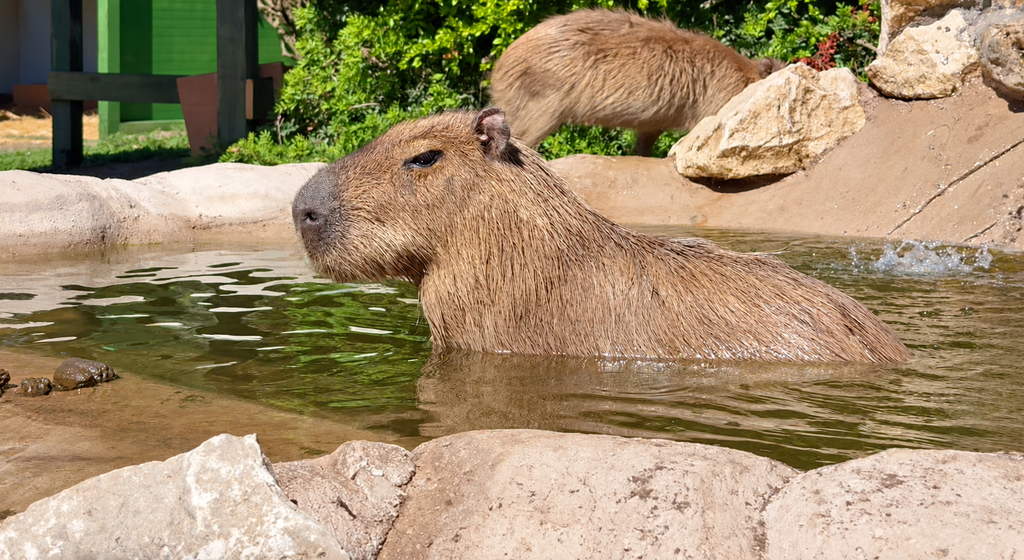
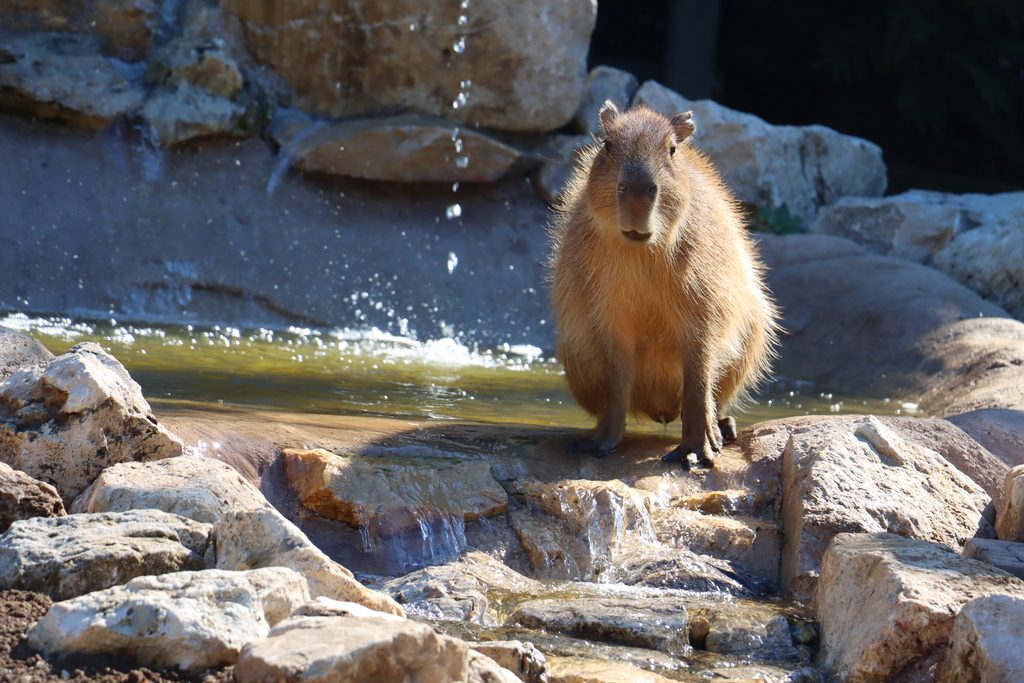
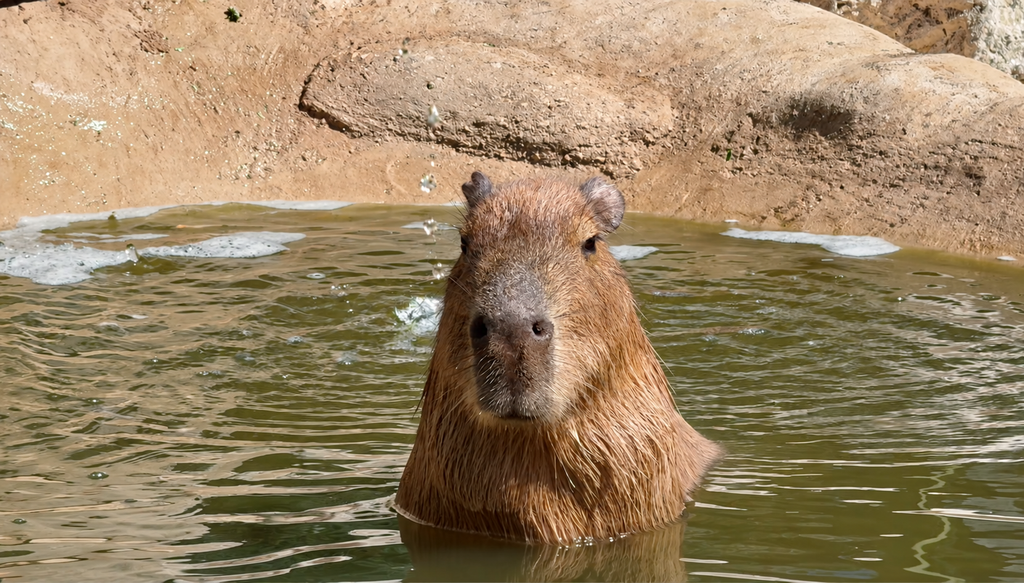
The three young adults have already begun exploring their new habitat, particularly its two pools and waterfall. Water plays a fundamental role in capybara behaviour, and the animals can almost completely submerge themselves, leaving only their eyes above the surface.
“It is the largest rodent in the world and our three individuals are young adults,” explains Camillo Sandri, Zoological Director of Zoomarine. “The females are two years old and the male is three, and from their first days of adaptation they have already shown differences in personality: the male is the most adventurous, the smaller female enjoys spending a lot of time ‘soaking’, while the larger female alternates resting in the water with naps in the shade of the hedge. It is precisely to meet the needs of the species and give them more choice that we designed the new habitat with environments offering different characteristics. Of the two pools, the one with the continuously recirculating waterfall is certainly proving the most popular: here they can take real ‘showers’ or submerge themselves almost completely, leaving only their eyes above the water.”
Studying how capybaras use water to defend themselves
The arrival of the three capybaras has also provided an opportunity to investigate their relationship with water from a scientific perspective.
Researchers from Openature Foundation, Zoomarine’s research and conservation organisation, have begun a study focusing on diving as a defence strategy. The research will examine the frequency and duration of dives, the circumstances that trigger them and possible behavioural differences between the three individuals.
The aim is to better understand when capybaras choose water as a refuge, how long they remain submerged in relation to a perceived threat and which factors influence this behaviour. The relationship is particularly interesting because some of their natural predators, including green anacondas and caimans, are themselves aquatic or semi-aquatic.
A species closely tied to increasingly fragile wetlands
For capybaras, water is not simply a place to escape from danger. The species is closely associated with the rivers, marshes and flooded grasslands of South America, ecosystems that are undergoing major environmental changes.
The Pantanal, the world’s largest tropical wetland and one of the emblematic habitats of the capybara, has experienced a dramatic reduction in water surface. According to the data cited by Zoomarine, this has fallen by around 80.7%, from 19,781 square kilometres to 3,818 square kilometres.
The arrival of the capybaras therefore also marks Zoomarine’s participation in “Wetlands for Life”, the campaign promoted by the European Association of Zoos and Aquaria (EAZA) to raise awareness of the importance and vulnerability of wetlands.
Following the recent arrival of birds of prey, the three capybaras bring the number of animal species at Zoomarine to 41, while their new habitat will also serve as a setting for research into a behaviour that links these animals particularly closely to the aquatic environments on which they depend.