
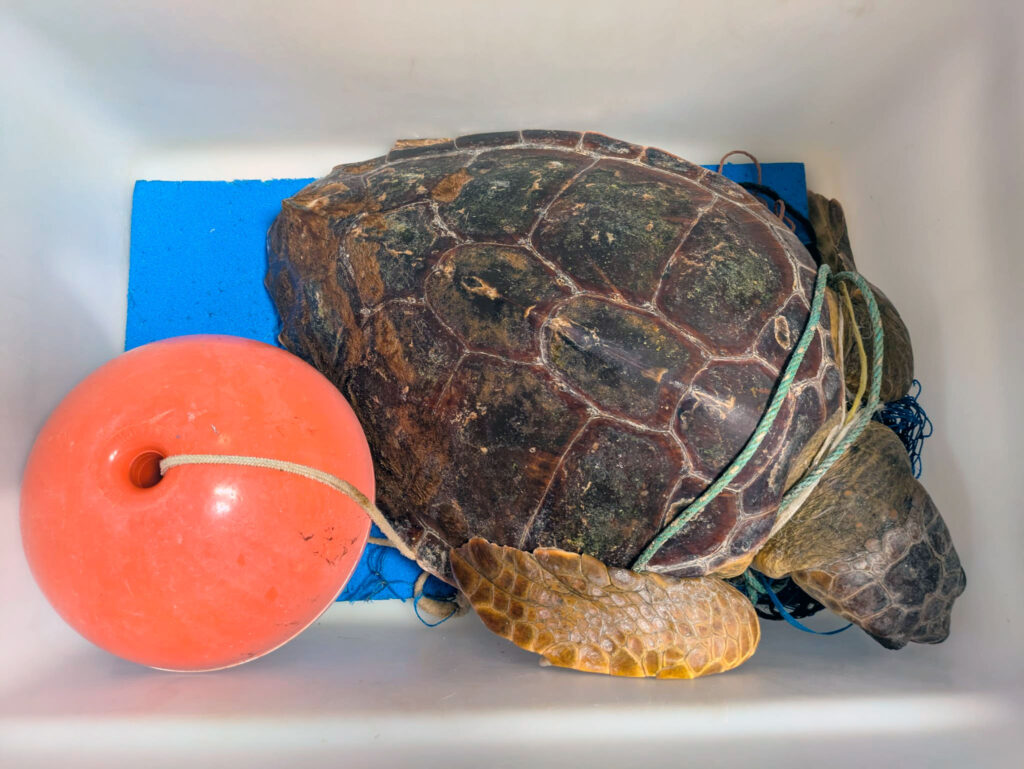
A sea turtle is recovering at ARCA del Mar, the marine wildlife rescue centre at Oceanogràfic Valencia, after being rescued off the coast of Puerto de Sagunto with a buoy and several ropes tightly wrapped around its neck and both front flippers.
The turtle was spotted by a recreational boater, whose quick response and knowledge of the rescue protocol proved crucial to the animal’s survival.
A rescue made possible by following the protocol
While anchored off the coast, the boater noticed a buoy moving unusually through the water. On closer inspection, he discovered that a sea turtle had become entangled beneath it.
After calling 112, he followed instructions from the emergency services and the Oceanogràfic Foundation, carefully bringing the turtle aboard without removing the ropes before transporting it to Canet d’en Berenguer Yacht Club, where the rescue team was waiting.
According to the Oceanogràfic Foundation, the boater’s actions significantly increased the turtle’s chances of recovery. He was familiar with the emergency procedure thanks to awareness campaigns carried out by the foundation in marinas and sailing clubs.
Veterinary examination reveals soft-tissue injuries
Keeping the entangling material in place allowed veterinarians to assess the injuries before removing the ropes and buoy.
The initial examination revealed compression injuries to the turtle’s neck and both front flippers. Blood tests, X-rays and an ultrasound showed no evidence of bone damage, although the animal will continue to receive specialised treatment while its recovery is monitored.
Never remove ropes or nets
The Oceanogràfic Foundation is using the rescue to remind the public that entangled marine animals should never be freed before reaching a specialised rescue centre.
Leaving ropes, fishing gear or other debris in place enables veterinarians to accurately assess the extent of the injuries and determine the most appropriate treatment.
The foundation also encourages anyone who encounters an injured or entangled marine animal to call 112 immediately, stressing that rapid coordination between the public, emergency services and wildlife rescue specialists is essential to maximise the animal’s chances of survival.