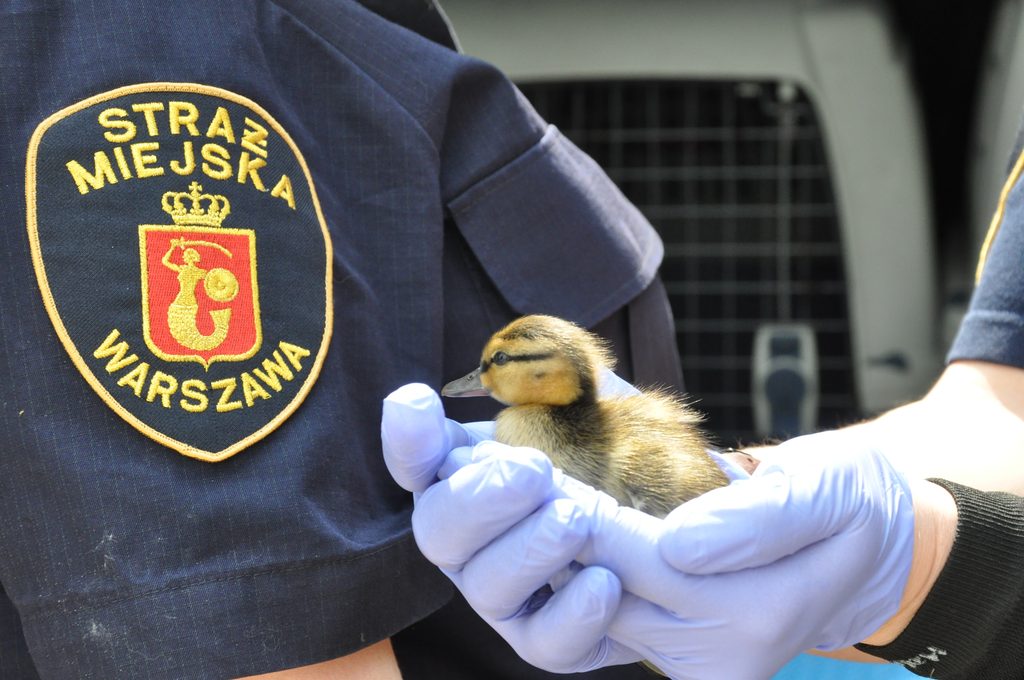
A young bird on the ground or a leveret alone in the grass does not necessarily need to be rescued. Warsaw Zoo is once again calling on people not to remove young wild animals from their natural environment without first checking whether they are actually injured, ill or orphaned.
The message is at the heart of the fourth edition of the “ZOOstaw, NIE porywaj!” campaign, which could be translated as “Leave it, don’t take it!”. The initiative is organised by Warsaw Zoo together with the Ptasi Azyl rehabilitation centre for protected native birds, Warsaw Municipal Forests and the Warsaw Municipal Guard.
The 2026 campaign will conclude with a family event at Warsaw Zoo, where experts will explain how to respond responsibly when encountering young wildlife and how to recognise when human intervention is genuinely necessary.
Every spring, Warsaw’s Municipal Guard receives hundreds of reports concerning young birds and mammals that appear to have been abandoned. But an animal being alone does not necessarily mean its parents have left it: in many cases, adults remain nearby but out of sight.
Removing a healthy youngster can therefore do more harm than good, depriving it of parental care and of the opportunity to learn behaviours essential for survival in the wild.
Almost 9,000 birds admitted in eight months
The scale of the phenomenon is reflected in data from the Ptasi Azyl rehabilitation centre. Between January and mid-August 2026, the centre received 8,770 birds, including 3,325 pigeons and 5,445 protected and other bird species.
Young birds accounted for 64% of this second group. According to the campaign organisers, most showed no injuries or signs of disease and were primarily chicks that had fallen or jumped from their nests.
In such cases, intervention is not always necessary. If the nest can still be located and the youngster is healthy, specialists explain that it can often simply be placed back inside rather than being taken to a rehabilitation centre.
A similar situation affects mammals. By 24 August 2026, the Warsaw Municipal Forests Wildlife Rehabilitation Centre had received 1,466 animals, 46% of them young. As in previous years, some had been unnecessarily removed from the wild.
Helping sometimes means leaving an animal where it is
The campaign therefore encourages people to assess the situation before acting. Finding a young animal outside a nest or den is not, on its own, evidence that it needs to be rescued.
The first step should be to determine whether the animal is actually injured, sick or orphaned and whether its parents may still be nearby.
That is the central message Warsaw Zoo and its partners want visitors to take away from this year’s campaign: responsible wildlife rescue does not always mean taking an animal away. Sometimes, the best intervention is not to intervene at all.