
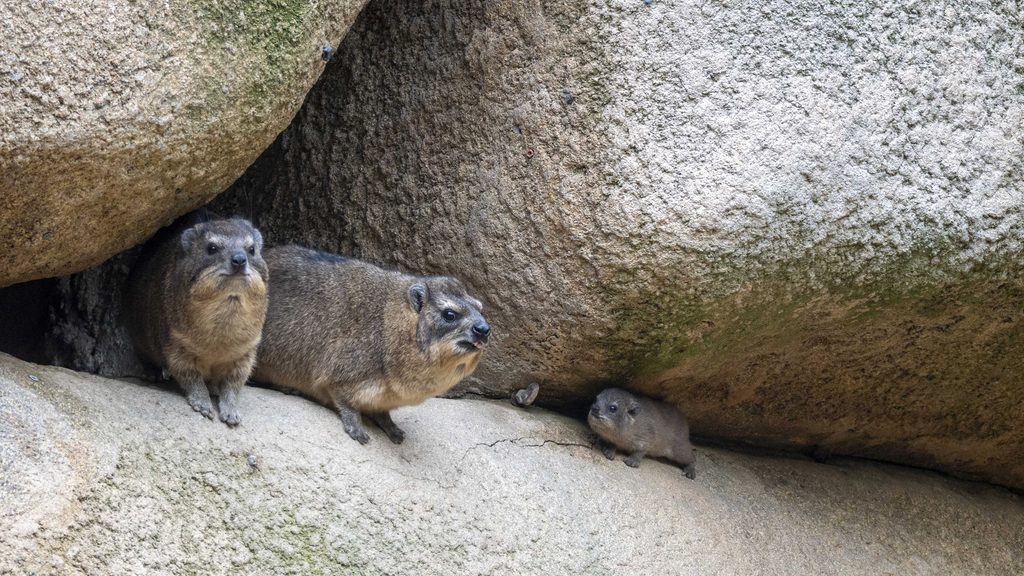
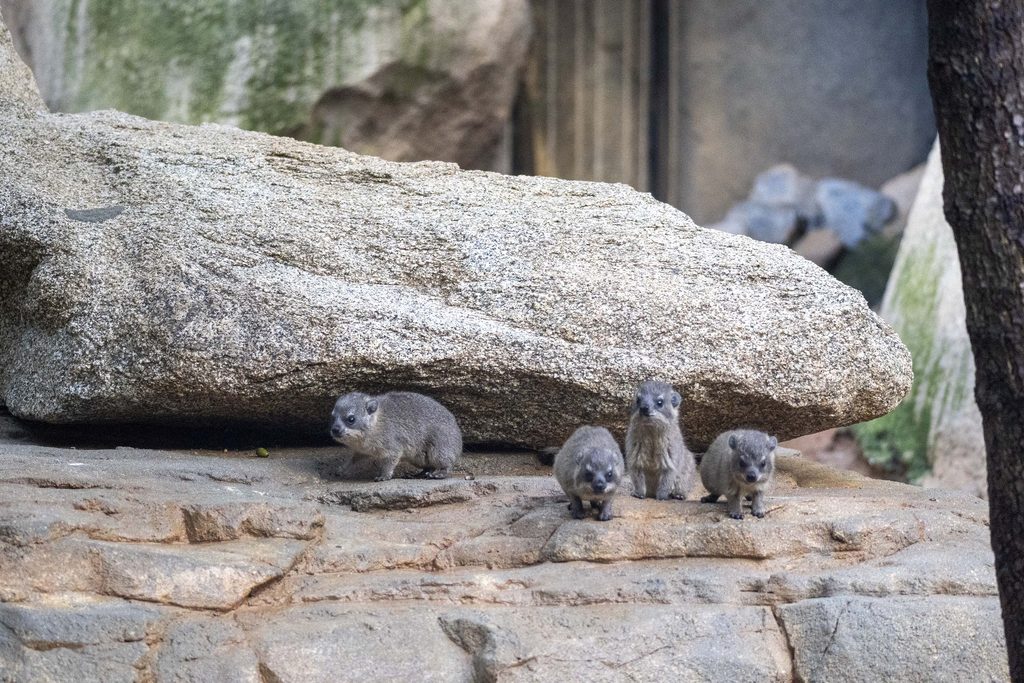
Four rock hyraxes (Procavia capensis) have been born at Bioparc Valencia, bringing the park’s group from four to eight individuals.
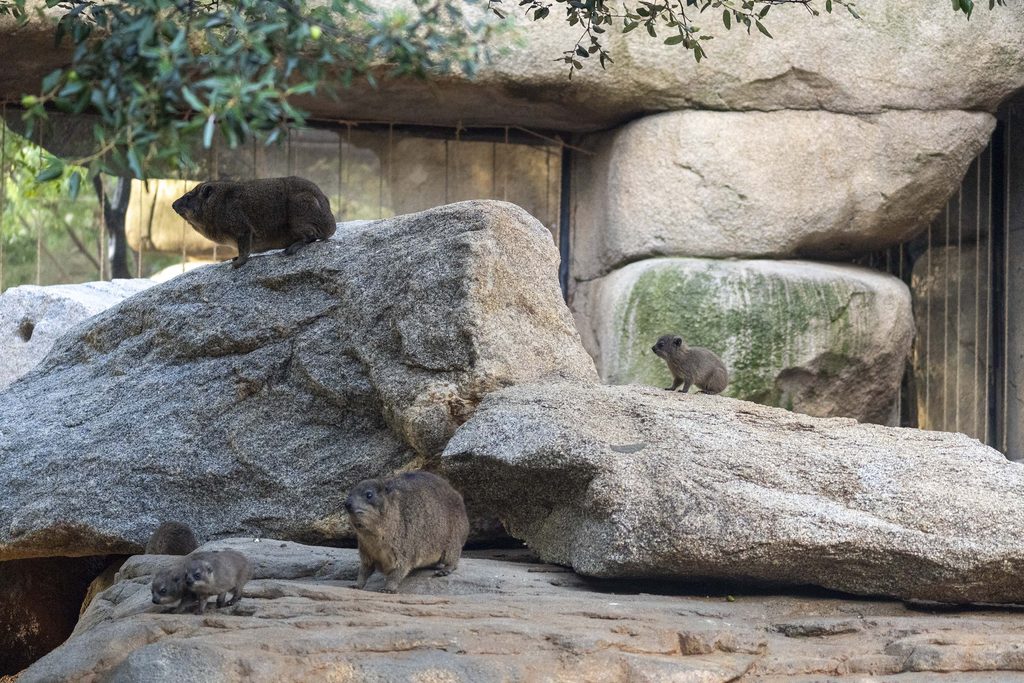
The new arrivals, three males and one female, have already begun exploring their surroundings, climbing over rocks, moving through crevices and following the adults around their enclosure.
According to Bioparc Valencia, it is currently the only zoological institution in Spain to keep this species, a small African mammal with two particularly interesting connections: its evolutionary relationship with elephants and its possible role in the origin of Spain’s name.
Did rock hyraxes give Hispania its name?
One theory about the origin of the name Hispania traces it to the Phoenician expression I-span-ya, interpreted as “land of hyraxes”.
According to this hypothesis, Phoenician travellers arriving on the Iberian Peninsula encountered rabbits, animals unfamiliar to them but resembling the hyraxes they knew from other regions.
They may therefore have referred to the territory using a name associated with these small mammals.
However, this is one of several proposed explanations for the origin of Hispania, and the etymology remains debated.
Small mammals with an unexpected evolutionary relationship
At first glance, rock hyraxes resemble large rodents. Their evolutionary history, however, tells a very different story.
Hyraxes belong to the order Hyracoidea and share a distant common ancestry with elephants and sirenians, the group that includes manatees and dugongs.
Despite their very different sizes and appearances, these mammals are part of related evolutionary lineages that originated in Africa.
Rock hyraxes are well adapted to rugged landscapes and rocky outcrops. Rather than digging burrows, they use natural cavities and crevices as shelters.
Their ability to move quickly across uneven rock surfaces helps them escape predators, while their brown fur provides camouflage against the surrounding terrain.
Four youngsters already exploring the rocks
Rock hyraxes have a gestation period of approximately eight months, relatively long for mammals of their size.
Their young are born covered in fur and at an advanced stage of development. They can move independently shortly after birth and begin eating solid food at an early age.
The four youngsters at Bioparc Valencia are already displaying these abilities as they explore the rocky areas of their enclosure.
The hyraxes live in a multi-species habitat alongside several bird species, including northern bald ibises (Geronticus eremita), Abdim’s storks, hamerkops, vulturine guineafowl and superb starlings.
The enclosure recreates elements of the African savannah landscape, including rocky formations known as kopjes, which provide shelter and vantage points for many species.
More births at Bioparc Valencia
The arrival of the four hyraxes follows several other births recorded at Bioparc Valencia in recent months.
These include mangabeys, blesbok, duikers and drills, alongside young chimpanzees, elephants and rhinoceroses.
The park participates in scientifically managed zoological breeding programmes, while Bioparc Foundation supports biodiversity conservation initiatives.
The latest births also offer an opportunity to introduce visitors to a relatively little-known species whose evolutionary history and possible connection to the name of the Iberian Peninsula illustrate an unexpected link between zoology and history.