
Three capybaras (Hydrochoerus hydrochaeris) living at Zoomarine in Italy have undergone their first veterinary check-up directly in their habitat, just over a month after arriving from a zoological park in Vienna.
The examinations included weighing, heart and lung auscultation, and checks of their feet and muscles.
The procedures were made possible by a training programme introduced following the animals’ arrival, allowing all three capybaras to voluntarily participate in routine health monitoring.
The approach aims to integrate veterinary examinations into the animals’ daily routine while respecting their individual behaviour and needs.
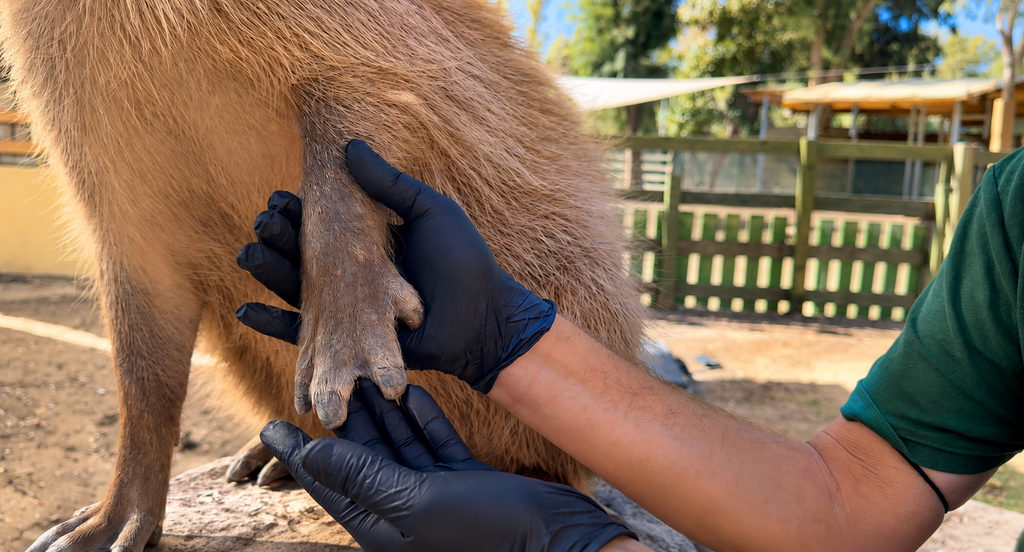
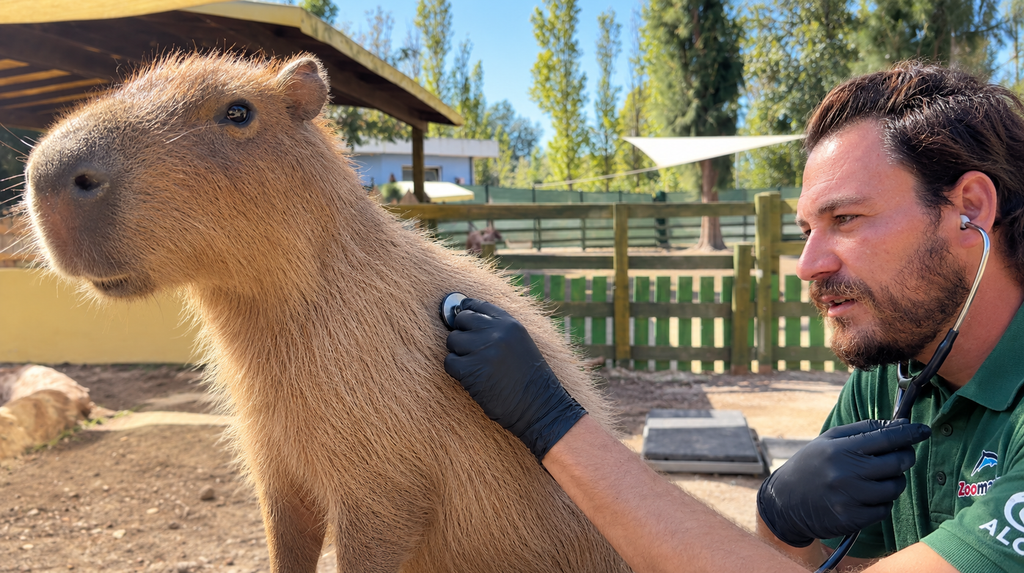
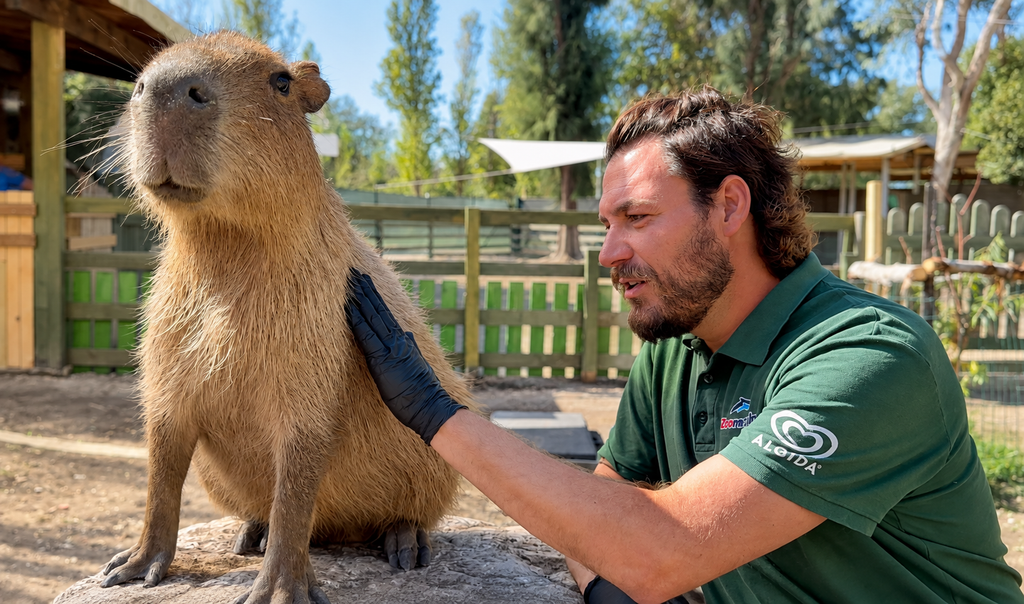
Training for voluntary veterinary examinations
The three capybaras, two two-year-old females and a three-year-old male, spent their first three days in an initial acclimatisation phase before moving into their permanent habitat.
Since then, keepers and veterinary staff have gradually familiarised the animals with routine health checks, encouraging voluntary cooperation.
“Each individual has its own personality, and our work consists of respecting each animal’s pace and needs, gradually familiarising them with the presence of keepers and veterinarians. This allows us to carry out even very thorough examinations directly in their habitat, from weighing and listening to their hearts and lungs to checking their feet and muscles,” explains Cristina Pilenga, Curator at Zoomarine.
Veterinary training is an important tool in the management of animals under human care, allowing routine health checks to be performed through learned behaviours and voluntary cooperation.
For capybaras, this approach enables certain examinations to take place in their familiar environment, reducing the need for relocation or physical restraint.
Health monitoring is complemented by a species-specific nutritional plan, including hay, vegetables, small amounts of fruit and food enrichment distributed throughout the day.
Two pools and different individual behaviours
Native to South America, capybaras are the world’s largest living rodents and are strongly associated with aquatic environments.
In the wild, they inhabit riverbanks, marshes, wetlands and seasonally flooded grasslands, using water as a refuge from predators.
At Zoomarine, the three capybaras have access to two pools, including one with a continuously circulating waterfall.
According to the animal care team, this pool is particularly popular with the animals.
“They have access to two pools, but the one with the continuously circulating waterfall is definitely their favourite. The smaller female spends a great deal of time submerged, while the larger female alternates between swimming and resting in the shade. The male, meanwhile, is the most adventurous,” Pilenga explains.
These observations highlight differences in individual behaviour and the importance of considering each animal’s preferences in daily management.
Research into capybara diving behaviour
The capybaras’ relationship with water is also the focus of a new research project launched by Openature Foundation, Zoomarine’s research and conservation organisation.
The study aims to investigate the frequency and duration of diving behaviour, as well as the possible reasons behind it.
For capybaras, water serves several important functions. It helps regulate body temperature, provides protection from predators and plays a central role in their daily activities.
Systematic observation of diving behaviour may contribute to a better understanding of the species’ behavioural needs and provide useful information for habitat management in zoological institutions.
The project forms part of Openature Foundation’s research activities, complementing the ongoing monitoring of animals at Zoomarine.
Animal welfare through daily monitoring
The arrival of the three capybaras is part of the ongoing expansion of Zoomarine’s zoological collection, which currently includes 41 animal species, according to the park.
Their first veterinary check-up is one element of a broader health monitoring programme combining daily observations, species-specific nutrition, training and regular examinations.
The ability to perform certain veterinary procedures directly in the animals’ habitat, with their voluntary participation, is an important aspect of their ongoing care.
Monitoring will continue through regular assessments of the three capybaras’ physical condition and behaviour, alongside observations conducted as part of the diving research project.