
An “aphid farm” could become an important component of future conservation breeding programmes for wild pollinators.
The unusual challenge has emerged from the first breeding season of Zoo LIFE Pollinators, a European project led by the Italian biopark Zoom Torino and co-funded by the European Union.
The initiative aims to develop reliable breeding techniques for wild pollinators under human care, establishing shared protocols that could eventually be applied to species threatened with extinction.
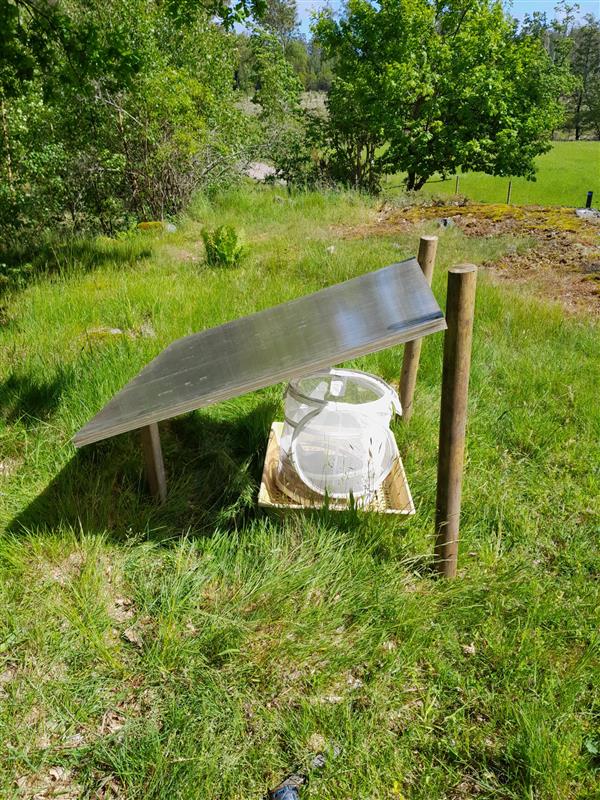
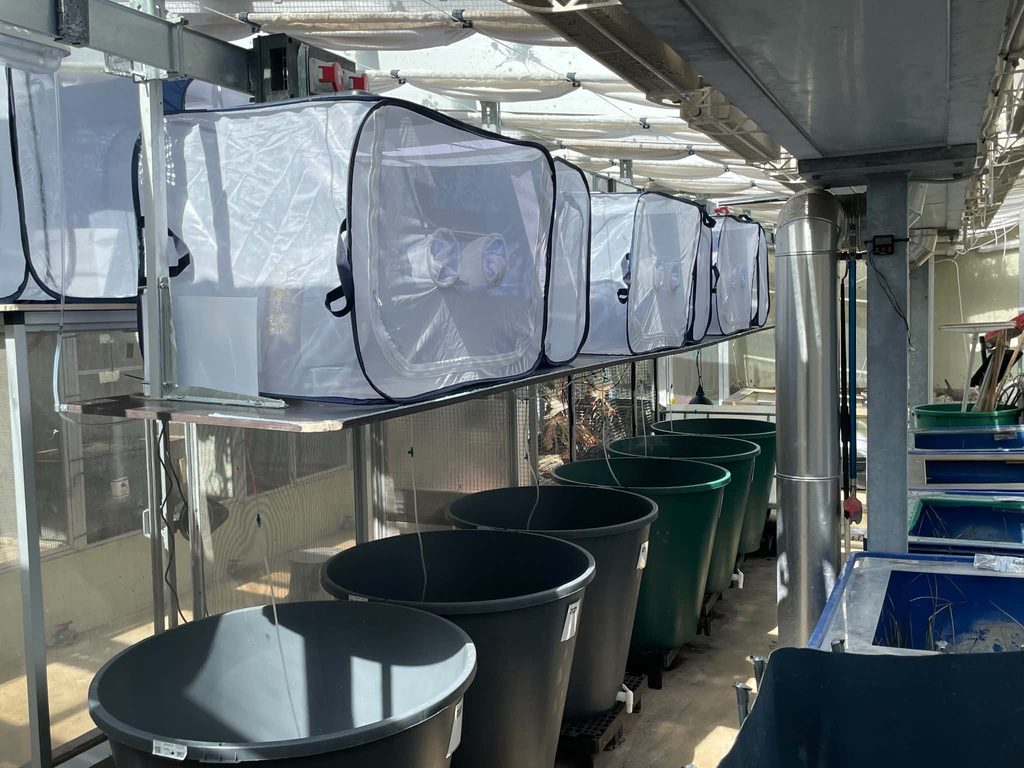
The first experimental phase has concluded at three European research hubs: two at Copenhagen Zoo in Denmark and one at Nordens Ark in Sweden.
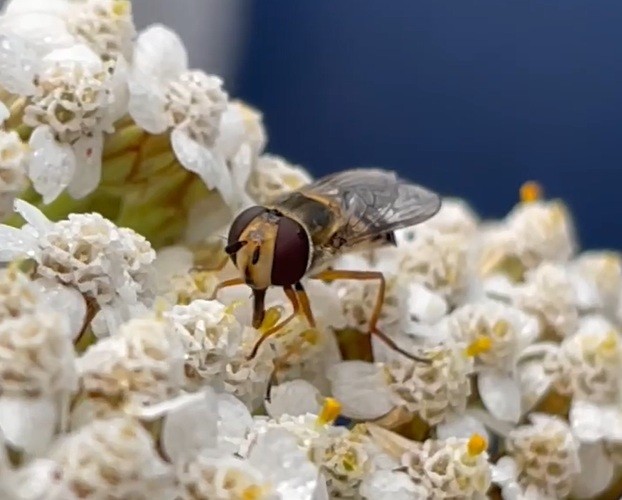
Researchers are working with three currently non-threatened species: the red mason bee (Osmia bicornis), the marmalade hoverfly (Eupeodes corollae) and the Glanville fritillary butterfly (Melitaea cinxia).
These insects have very different life cycles and reproductive requirements, making them useful models for developing techniques that could be adapted to a wider range of pollinator species.
The decline of Europe’s wild pollinators
The project responds to the need for additional conservation tools as wild pollinator populations face increasing pressures.
According to figures reported by Zoo LIFE Pollinators, 10% of Europe’s wild bee species and 15% of its butterfly species are threatened with extinction.
The project also reports that the number of threatened butterfly species has increased by 76% over the past decade.
A further assessment published by the European Commission in September 2026 indicates that almost 11% of the moth species assessed in Europe are threatened with extinction.
Pollinating insects play a fundamental role in the reproduction of many wild and cultivated plants, contributing to ecosystem functioning and biodiversity.
Alongside habitat protection and efforts to reduce environmental pressures, Zoo LIFE Pollinators aims to strengthen expertise in breeding these insects under human care.
Why breeding hoverflies requires an aphid farm
One of the main challenges identified during the first breeding season concerns the marmalade hoverfly (Eupeodes corollae).
Hoverflies are flies often mistaken for bees or wasps because of their colour patterns, but they belong to a different group of insects.
Adults of this species feed on nectar and contribute to pollination. Their larvae, however, are predators that feed on aphids.
This difference makes managing the entire life cycle under controlled conditions particularly demanding.
“To breed a marmalade hoverfly, which feeds on nectar as an adult but is predatory during its larval stage, we first need to breed the aphids its larvae feed on,” explained Signe Ellegaard, zoologist at Copenhagen Zoo and breeding coordinator for Zoo LIFE Pollinators.
“One of the challenges that emerged during the first cycle was developing a genuine aphid farm capable of ensuring a constant supply of prey.”
Establishing this system is one of the priorities for the winter months ahead of the next breeding season.
The challenge is not simply producing enough food, but ensuring that suitable prey is available at the correct stages of larval development.
Red mason bees require suitable nesting cavities and pollen
The second model being studied at Copenhagen Zoo focuses on the red mason bee (Osmia bicornis), a solitary wild bee.
Unlike social bees such as the honeybee, this species does not form colonies organised around a queen.
Females use existing cavities to construct nests, where they lay their eggs and provide food reserves for developing larvae.
Breeding red mason bees under controlled conditions therefore requires suitable nesting sites and an adequate supply of pollen.
“With the red mason bee, we need to recreate the conditions for cavity nesting and ensure a supply of pollen for the larvae,” Ellegaard explained.
“These are two species with very different requirements, allowing us to test the model in several ways.”
The research provides an opportunity to compare the needs of a solitary bee with those of a hoverfly whose larvae depend on a reliable supply of live prey.
Nordens Ark studies the Glanville fritillary butterfly
The third European hub, based at Nordens Ark in Sweden, is focusing on the Glanville fritillary butterfly (Melitaea cinxia).
In this case, one of the main challenges is synchronising larval development with the availability of suitable host plants.
Butterfly caterpillars feed on plant material, but many species depend on particular host plants rather than feeding indiscriminately on vegetation.
These plants must be available during the specific stages of the life cycle when larvae are actively feeding.
“Working with a butterfly allows us to introduce requirements and life-cycle stages that differ from those encountered with bees and hoverflies,” said Karin Amsten, Research Coordinator at Nordens Ark.
“Butterflies are not predatory during their larval stage; they feed on plants. But not just any plants: each species has its own specific host plants, which must be available during the few weeks when the larvae are active.”
Ensuring that the right plants are available at the right time is therefore essential to developing a reliable breeding protocol.
Eight zoological institutions and 16 European partners
Zoo LIFE Pollinators is co-funded by the European Union and coordinated by Zoom Torino, which leads the involvement of eight zoological institutions within a wider network of 16 partners across nine European countries.
The initiative aims to strengthen the contribution of zoological institutions to wild pollinator conservation by developing scientific knowledge and transferable breeding techniques.
The work at the three hubs represents an experimental phase.
The selected species are not currently threatened, but their different biological requirements allow researchers to investigate challenges that may also arise when breeding endangered pollinators.
The immediate objective is therefore not to intervene directly with the most vulnerable species, but to develop methods that could support future conservation programmes.
Towards European best practice guidelines in 2027
The next phase of the project will focus on refining the experimental systems.
During the winter, researchers at Copenhagen Zoo will work on establishing the aphid farm, while preparations continue across the hubs for the next breeding cycle.
Further trials are planned for spring 2027, allowing researchers to assess the effectiveness of the techniques developed and identify areas for improvement.
The project then aims to begin preparing its Best Practice Guidelines, bringing together the experience gained and making it available to the wider European scientific community.
The long-term objective is to provide zoological institutions and conservation organisations with reliable tools for breeding wild pollinators under human care.
Starting with three non-threatened species, the research addresses highly specific biological challenges, from securing a stable aphid supply to synchronising butterfly development with host plant availability.
The knowledge gained could eventually contribute to conservation programmes for pollinator species facing extinction in the wild.