
Nubian giraffes sharing a habitat with Grant’s zebras, vicuñas living alongside greater rheas, and squirrel monkeys occupying the same environment as Azara’s agoutis. These are among the mixed-species habitats being developed at Paignton Zoo in Devon, UK, as part of a wider transformation of its zoological environments.
The initiative follows the zoo’s transition to the management of Dutch company Libéma, which is introducing larger, more naturalistic habitats inspired by ecosystems around the world.
The aim is to bring compatible species together in shared spaces, increasing environmental complexity and providing additional opportunities for exploration and natural behaviour.
Nubian giraffes and Grant’s zebras share an African savannah
One of the most significant developments is taking place in the zoo’s African Savannah, an area that is continuing to evolve.
Here, Nubian giraffes (Giraffa camelopardalis camelopardalis) now share their habitat with Grant’s zebras (Equus quagga boehmi).
The zebras include Zebadee and Parsnip, a recently arrived father-and-son pair.
Their introduction marks an important stage in the development of a larger and more diverse savannah-inspired environment, with additional species expected to join in the future.
The zoo is currently exploring the possibility of introducing antelope to the habitat.
The concept is to reflect some of the characteristics of African open ecosystems, where different herbivore species occupy overlapping areas and use environmental resources in different ways.
Vicuñas and greater rheas in a South American-inspired habitat
Another example can be found in the zoo’s South American grasslands area.
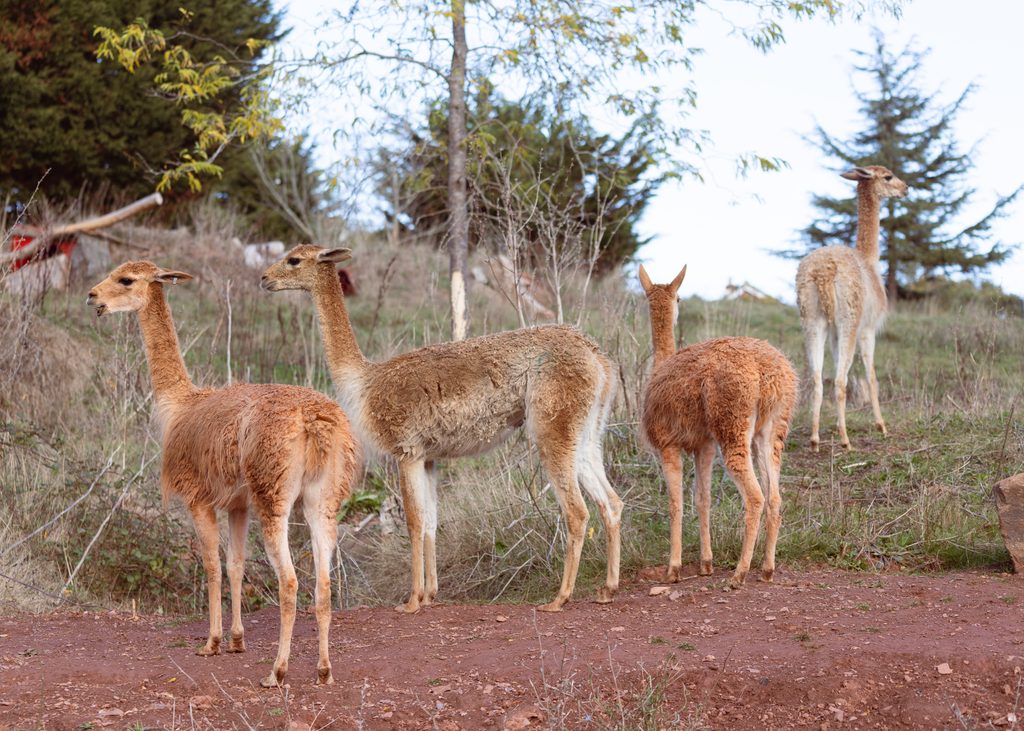
At Paignton Zoo, four vicuñas (Vicugna vicugna) share their environment with three greater rheas (Rhea americana).
Vicuñas are South American camelids adapted to high-altitude Andean environments, while greater rheas are large flightless birds associated mainly with the continent’s grasslands and open landscapes.
Bringing these species together allows visitors to observe animals with different biological characteristics and behavioural patterns.
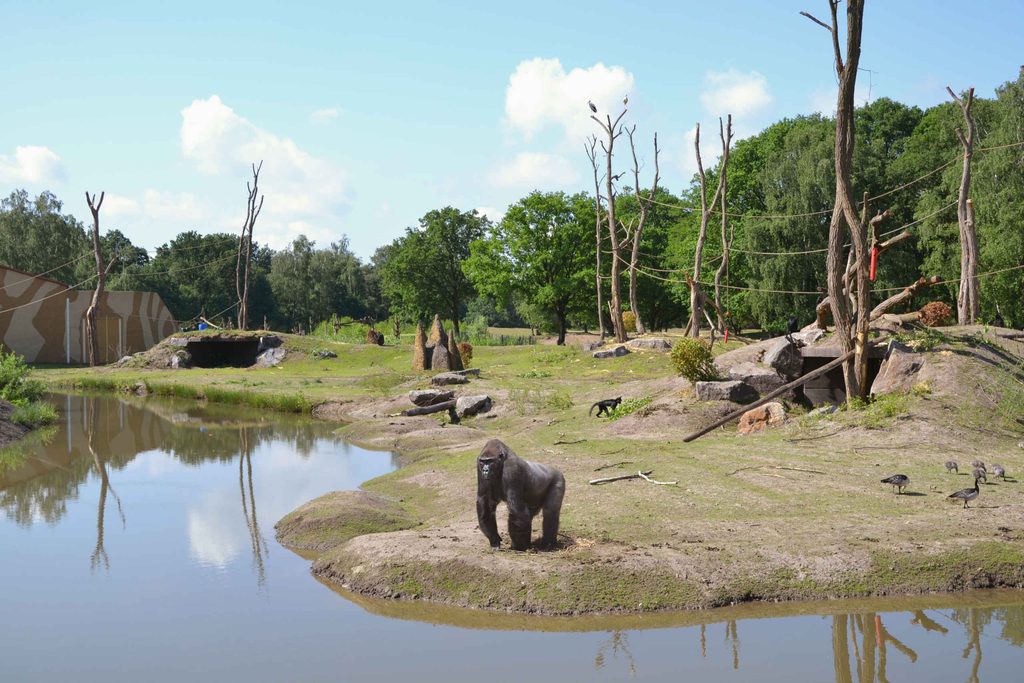
The habitat forms part of the zoo’s Grasslands development, which includes environments inspired by the African Savannah, South American Pampa and Central Asian Steppe.
Squirrel monkeys and Azara’s agoutis occupy different habitat levels
Mixed-species management is not limited to open grassland environments.
At Monkey Heights, squirrel monkeys already share their habitat with Azara’s agoutis (Dasyprocta azarae), South American rodents.
The two species primarily use different levels of the same environment.
Squirrel monkeys move through trees and elevated structures, while agoutis spend much of their time on the ground, where they forage for food.
This spatial separation can help facilitate coexistence between species with different ecological requirements, provided that appropriate resources and opportunities for choice are available.
Mixed-species habitats and animal welfare
Managing shared habitats requires careful assessment of species compatibility.
Simply originating from the same geographical region does not necessarily mean that two species can live together successfully.
Dietary requirements, social behaviour, space use, access to resources and potential competition must all be considered.
According to Paignton Zoo, mixed-species habitats can provide environmental enrichment by introducing new visual, olfactory and auditory stimuli while encouraging exploration.
Each introduction is carefully planned and monitored by the zoo’s animal care teams, with animal welfare remaining the priority.
“It’s fantastic to see these habitats coming to life and different species beginning to share their spaces. For the animals, it creates new opportunities to explore, interact with their surroundings and express natural behaviours, while giving our visitors a chance to see wildlife in a completely different way,” said Lisa Britton, Head of Living Collections at Paignton Zoo.
“Every introduction is carefully planned with animal welfare at its heart, and we’re really excited to see how these habitats continue to develop.”
Ongoing monitoring is particularly important because the presence of other species, while potentially providing behavioural opportunities, can also affect access to space and resources.
Habitat design must therefore provide sufficient complexity, opportunities for retreat and areas where animals can avoid interactions when necessary.
Future plans include gibbons, orangutans and babirusas
Paignton Zoo has also outlined further mixed-species projects.
Future plans include the possible introduction of pileated gibbons (Hylobates pileatus) alongside Bornean orangutans (Pongo pygmaeus).
The zoo is also considering adding antelope to the African Savannah and exploring the possibility of babirusas sharing a habitat with macaques.
These developments remain at the planning stage and will require specific assessments before any introductions take place.
The approach builds on Libéma’s experience managing zoological attractions in the Netherlands, where naturalistic and mixed-species habitats are an important part of zoo design.
A different approach to observing wildlife
Established in 1923, Paignton Zoo is home to numerous animal species within approximately 32 hectares of grounds that also contain significant botanical collections.
The zoo participates in European conservation breeding programmes for threatened species and is a member of the European Association of Zoos and Aquaria (EAZA).
The development of mixed-species habitats represents a shift in zoological design, aiming to provide more complex environments for animals while helping visitors understand the relationships between different species.
The long-term success of these shared habitats will depend on continued monitoring and the ability to adapt the environments to the needs of the animals involved.